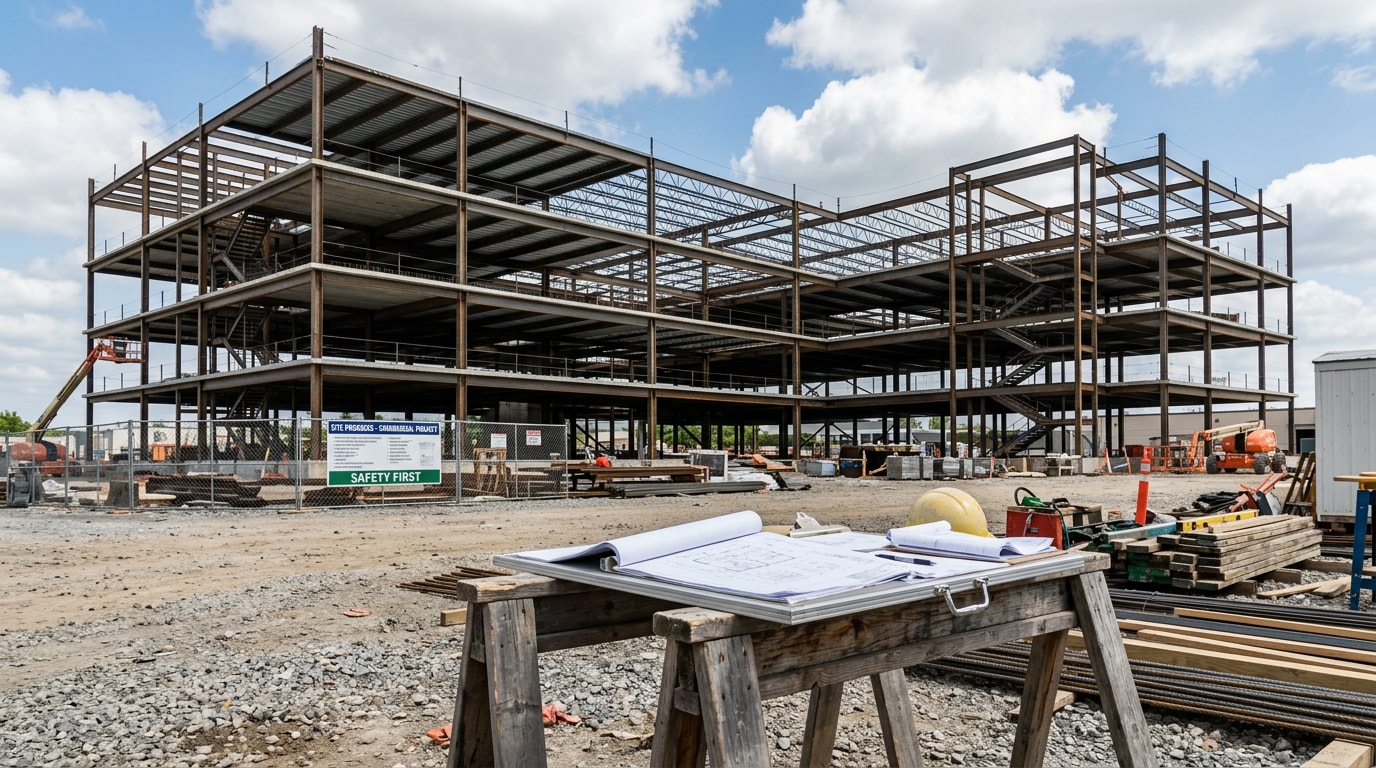
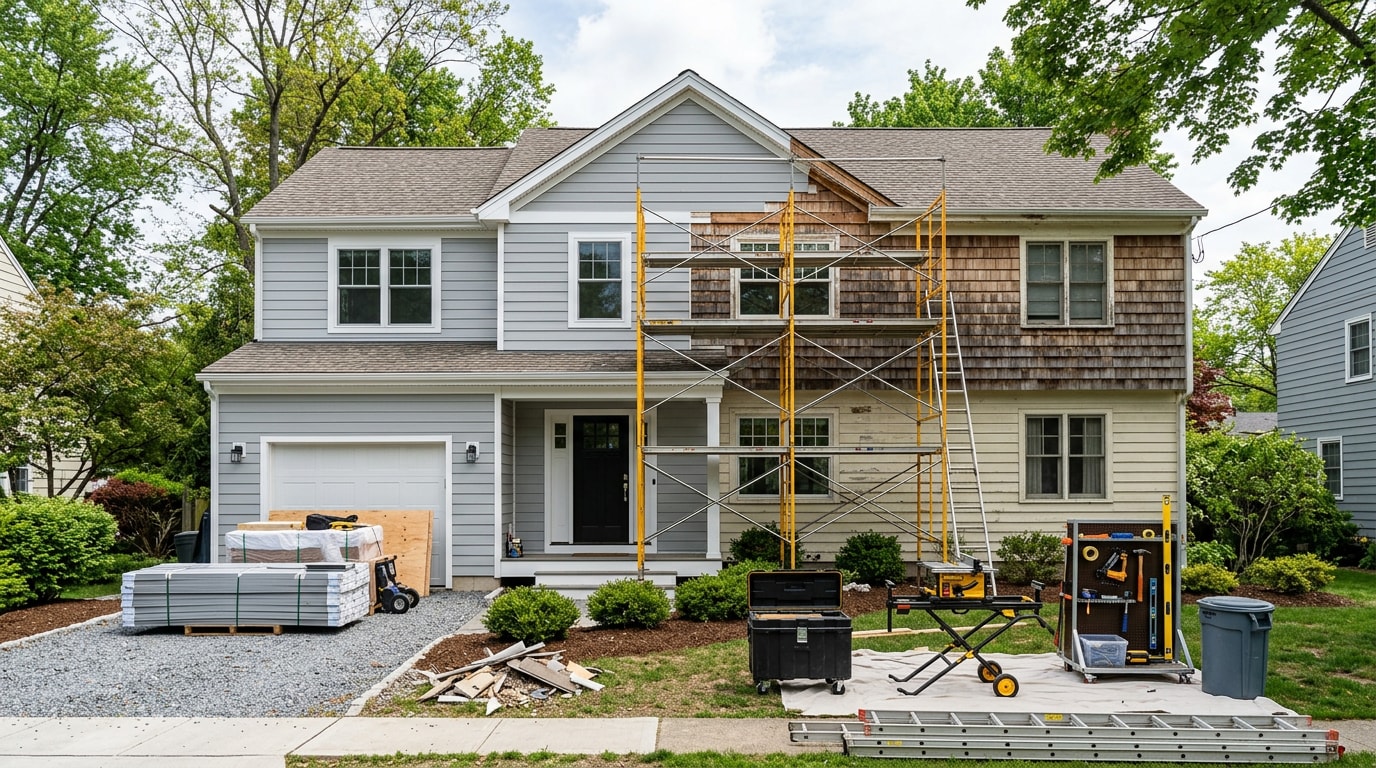
Residential general contractor services cover every stage of a home build or remodel, from the first permit application to the final walkthrough. The right contractor becomes your single point of accountability for budget, schedule, and every subcontractor on site. Here's what those services actually include, what they cost in 2026, and how to vet a contractor before you sign anything.
What Is a General Contractor?
A general contractor is the licensed professional who manages a residential construction or renovation project start to finish. That includes coordinating subcontractors, scheduling work, tracking the budget, and keeping you informed as the project moves forward.
Red Rock Construction's general contractor team handles this role across new builds, remodels, and site work, which is why most of the examples in this guide reference real phase-by-phase work rather than generic definitions.
Definition and Responsibilities of a General Contractor
On a residential job, oversight looks different than it does on a commercial build. Smaller crews and direct homeowner communication replace the layered approval chains common on commercial sites.
A typical general contractor's responsibilities include:
- Pulling permits and scheduling inspections
- Hiring and supervising subcontractors
- Ordering and tracking materials
- Managing the day-to-day construction schedule
- Keeping the homeowner updated on budget and timeline
Project oversight is the core of the job. Dozens of moving pieces have to land in the right order, or the whole schedule slips.
General Contractor vs. Building Contractor vs. Builder
Homeowners often hear "general contractor," "builder," and "building contractor" used interchangeably, but the terms aren't always synonymous. In most markets, a building contractor is just another name for a general contractor, while "builder" sometimes refers specifically to new-home construction rather than renovation work.
Licensing categories vary by state, so this distinction in one state may not hold in another. Verify the contractor's license classification before you sign anything.
General Contractor vs. Subcontractor vs. Construction Manager
Not every project needs a traditional general contractor. Larger or more complex builds sometimes use a construction manager instead, a role paid a fee for overseeing the job rather than marking up subcontractor costs. Construction managers often join earlier in design and may represent the owner's interests more directly during bidding.
Homeowners also run into specialty contractors, electricians, plumbers, roofers, who work as subcontractors rather than leading the project. Subcontractors answer to the general contractor, not the homeowner, and typically aren't responsible for permitting or overall scheduling. Knowing who you're actually talking to can prevent confusion later about who's responsible if something goes wrong.
What Do General Contractors Do in a Construction Project?
A general contractor's responsibilities shift dramatically depending on the construction phase. Tasks handled before a shovel hits the ground look nothing like the work required once crews are on-site.
Pre-Construction Stage Tasks
Before construction starts, a general contractor spends weeks on scope definition, cost estimates, and planning: finalizing drawings, lining up subcontractors, and securing permits.
Permitting on a typical residential project isn't a single step. It's a sequence:
- Municipal plan review
- Permit issuance
- Rough-in inspections (framing, electrical, plumbing)
- Final inspection before closeout
Timelines vary by jurisdiction, and some municipalities add steps for additions or structural changes. The International Code Council creates the International Building Code and International Residential Code, two model building codes that have been adopted as a base code standard by most jurisdictions within the United States , though local amendments are common.
In the Bighorn Basin and Yellowstone Country, the planning phase also has to account for a short building season. We schedule foundation and exterior work around frost depth and weather windows for projects in Cody and Powell differently than we would for a year-round market, which is a detail most national guides skip entirely.
Construction Stage Tasks
Once permits are issued, the focus shifts to subcontractor supervision, materials management, and ongoing quality control. Budget tracking becomes constant, since change orders and material price shifts can pull a project off its original estimate quickly.
Job site safety also falls under the general contractor's watch. Residential construction is addressed in specific OSHA standards for recordkeeping, general industry, and construction , covering everything from fall protection to ladder use. A general contractor sequences trades so they're not working on top of each other and keeps the site compliant with those standards.
The specifics vary by project. A kitchen remodel might mean sequencing three trades over two weeks. A site-improvement job might center on grading and drainage. Taking over a stalled project, more common than homeowners expect, often starts with auditing what's already been done before work resumes.
What Services Do General Contractors Offer?
General contractors offer a broad range of services spanning small repairs to full-scale renovations and new builds. Typical offerings include:
- New construction for ground-up homes and additions
- Residential remodeling for kitchens, bathrooms, and whole-home renovations
- Project management for homeowners who need a single point of accountability
- Site preparation including grading, excavation, and utility coordination
- Concrete foundation work as part of new builds and additions
- Roof installation and siding installation as part of exterior scopes
Essentially, any home project that benefits from one party managing subcontractors and permits under a single contract falls under general contracting.
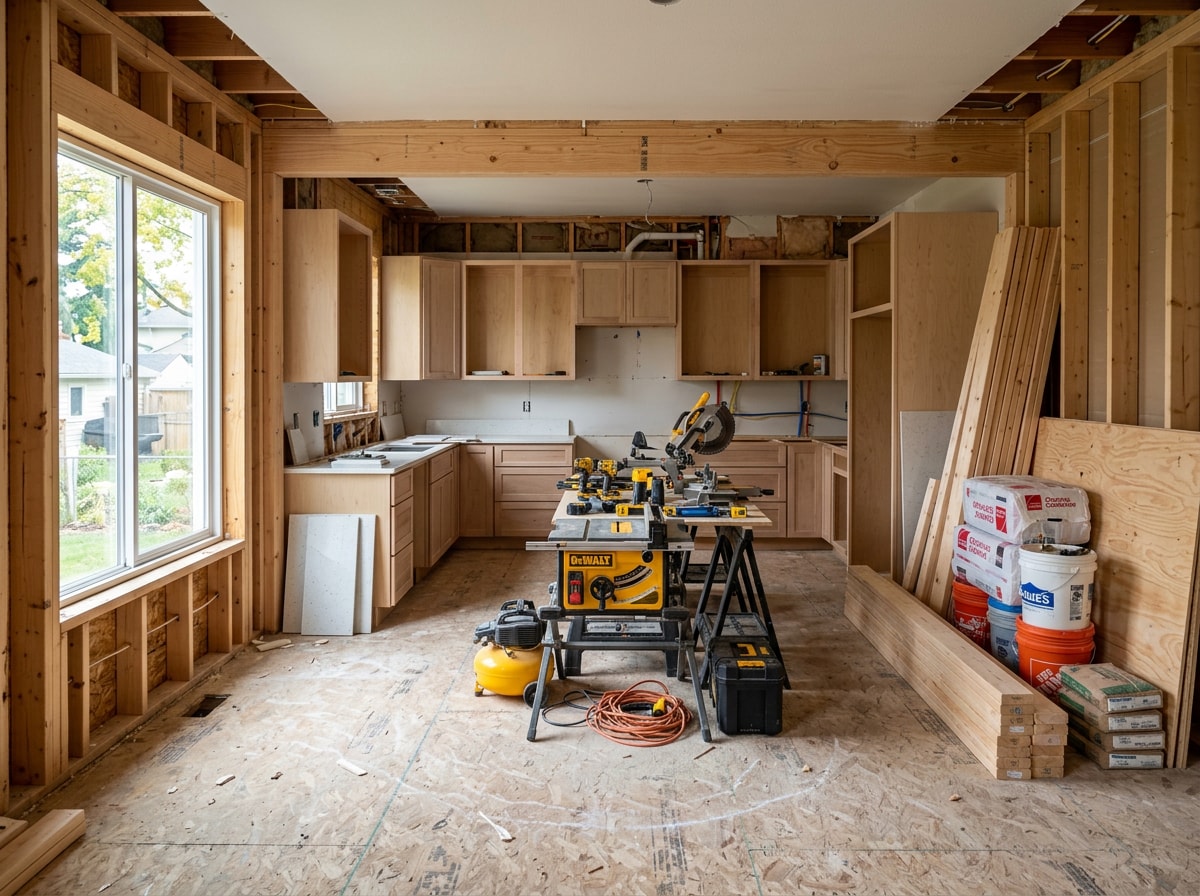
Bathroom Remodeling, Roofing, Siding, and Whole-Home Renovation
Bathroom remodeling usually involves coordinating plumbers, electricians, and tile installers within tight spatial constraints, which makes sequencing critical. Home improvement projects like basement finishing or window replacement tend to mix GC-managed labor with specialty subcontractors for electrical or HVAC work.
Roofing is frequently handled by a licensed roofing crew, with the general contractor managing permitting, inspections, and coordination with other exterior work like gutters or siding. Full residential construction services, additions, whole-home renovations, ground-up builds, pull all of this together under one schedule and one budget. If you're planning a new build rather than a remodel, our guide on new custom built homes in Greybull, WY walks through what to line up before breaking ground.
The Design-Build Model: A Faster Alternative to Traditional Bidding
Traditional general contracting follows a bid-build sequence: design first, then bid the finished plans to contractors. The design-build model combines design and construction under one contract, with a single team responsible for both. It's increasingly common for residential remodels.
The biggest draw is a single point of contact. One team is accountable for both design decisions and construction, so there's no finger-pointing between a separate architect and contractor when something doesn't fit as planned. That accountability tends to shorten the timeline, since design and early construction planning can overlap instead of running in strict sequence.
Change orders also tend to drop under design-build, since the team pricing the work is the same team that drew it. That said, design-build isn't automatically cheaper or better for every job. Simpler projects with a clear scope sometimes do fine with traditional bid-build. Compare proposals from both delivery models before assuming one fits your renovation better.
How Much Do Residential General Contractor Services Cost in 2026?
Cost is usually the first question homeowners ask, and the honest answer is: it depends on the fee structure. Here's a side-by-side look at the common fee structures homeowners run into.
| Fee Structure | How It Works | Typical Range |
|---|---|---|
| Percentage-of-project | Fee based on a share of total project cost | 10%–20% of project cost |
| Flat fee | Fixed price agreed upfront for a defined scope | Varies by project size |
| Cost-plus | Materials and labor billed at cost, plus a fee | Cost + 10%–15% markup |
| Hourly / Time & Materials | Billed hourly plus materials, common for small jobs | $50–$150+ per hour |
These are general ranges. Actual fees depend heavily on region, project size, and local labor markets. Request a free estimate once you have a sense of your project scope so you're comparing real numbers instead of national averages.
What Affects General Contractor Pricing?
Several factors push general contractor cost up or down:
- Service type. A bathroom refresh and a full home addition sit at opposite ends of the pricing spectrum.
- Urgency. Rush jobs or off-season scheduling can shift pricing depending on contractor availability.
- Project complexity. A remodel touching structural elements, electrical panels, or plumbing lines costs more to plan and execute than cosmetic updates.
- Home age and condition. Older homes often hide issues behind walls that only surface once demolition starts, which can affect both cost and timeline.
For context on where home-building dollars actually go, construction costs accounted for 64.4% of the average price of a new home in 2024 compared to 60.8% in 2022, a record high , according to NAHB's Cost of Construction Survey. That split between construction cost and everything else (lot, financing, overhead) is a big reason two "similar" quotes can land far apart.
Cost by Service Type
National averages offer a starting point, but actual cost in your area can run higher or lower depending on local labor and material costs. Treat these ranges as a planning baseline, not a quote.
| Project Type | Typical Cost Range (National Average) |
|---|---|
| Bathroom remodel | $10,000 – $25,000 |
| Kitchen remodel | $25,000 – $60,000 |
| Home addition | $45,000 – $150,000+ |
| Whole-home renovation | $100,000 – $300,000+ |
These figures assume mid-range finishes. High-end materials or structural changes push costs well beyond these bands. Request itemized estimates from at least two or three contractors before comparing bids.
How to Choose a Residential General Contractor
Once the budget picture is clear, the next step is vetting. Hiring a contractor is as much about trust as it is about price, and a bit of upfront vetting can prevent most disputes that derail projects later.
Vetting Checklist: Contracts, Insurance, and Licensing
Before signing anything, confirm the basics:
- The contract spells out full project scope, payment schedule, timeline, and change-order process in plain language
- The contractor can provide proof of general liability insurance and workers' compensation coverage
- The license is current and classified for the type of work you need
- References from recent, comparable projects check out
Consider only contractors who are licensed and insured, and check with your state or county government to confirm a license before accepting proof at face value , per Federal Trade Commission consumer guidance. Liability coverage protects you if something goes wrong on-site; without it, an injured worker or property damage claim can become your financial problem.
It's also worth confirming a contractor actually serves your location before requesting a bid. Check our Cody, WY service area page for an example of what coverage details to look for.
Why Homeowners Work With Red Rock Construction
Red Rock Construction is a licensed general contractor serving Powell, Cody, Sheridan, Billings, Red Lodge, Worland, Greybull, and Lovell. On a recent remodel, our crew caught a structural issue hidden behind drywall before demo was even finished, the kind of catch an experienced local GC budgets time for instead of treating as a surprise change order.
Browse our completed projects to see the range of residential and commercial work our team has handled across Wyoming and Montana, then get a free estimate for your own project.
FAQ
What exactly does a residential general contractor do on a home project?
A residential general contractor handles project management: hiring subcontractors, pulling permits, tracking budgets, and keeping the schedule on track. They're the main point of contact between you and everyone working on-site.
What services are included when hiring a general contractor?
Scheduling, material procurement, subcontractor coordination, permitting, and on-site supervision are standard. The exact services included vary by contract, so ask upfront whether design work, cleanup, or warranty follow-up are part of the agreement or billed separately.
Does a general contractor do the actual construction work?
Sometimes, but not always. Many general contractors subcontract most hands-on work to specialized trades, electricians, plumbers, framers, while focusing their own time on coordination and oversight. The distinction comes down to who manages the project versus who physically performs a given task.
Can a general contractor help with design decisions?
Many general contractors offer design input, especially around feasibility: whether a layout change is structurally possible or code-compliant. For projects needing more design depth, a design-build setup folds an architect or designer into the same team as the contractor from the start.
How much does it cost to hire a general contractor for a small project?
Small jobs are often billed hourly or time-and-materials, typically $50 to $150+ per hour plus materials. For a defined scope like a bathroom refresh, many contractors will quote a flat fee instead.
Is it worth hiring a general contractor for a small renovation?
For a single-trade job, like painting one room, it's often not necessary. Once a project touches two or more trades, permits, or structural work, a general contractor's coordination usually saves more in avoided delays and mistakes than their fee costs.