
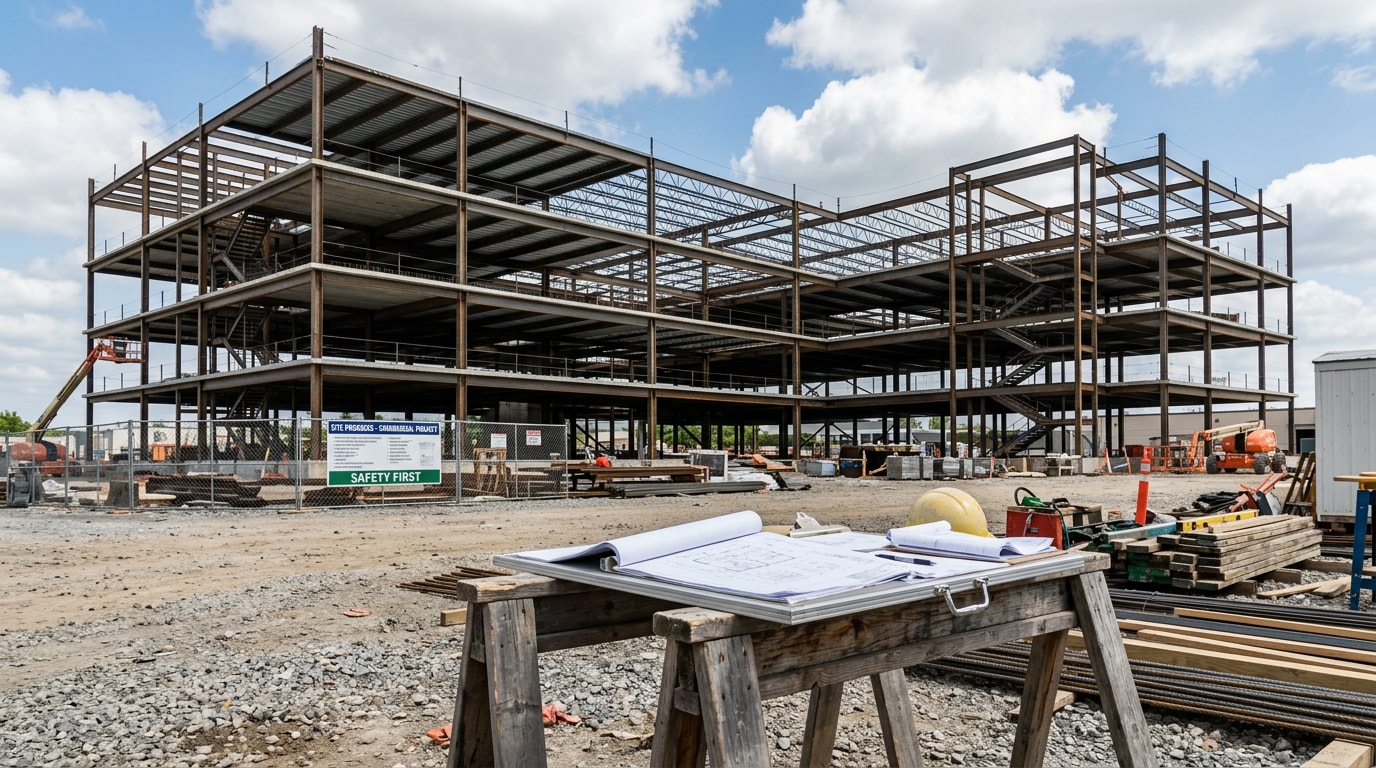
Florida general contractor license experience requirements boil down to one number: four years, verified in writing, with at least one of those years spent running a crew. Miss a documentation detail and the Construction Industry Licensing Board (CILB) can bounce your application back months later, after you've already scheduled an exam. This guide breaks down exactly what counts, what doesn't, and how to paper-trail your way to an approved application.
Florida General Contractor License Requirements at a Glance
Florida licenses general contractors on four fronts: experience, testing, paperwork, and insurance.
- Four years of verifiable construction experience, or an approved combination of experience, college credit, and military service
- A passing score on the required Florida contractor licensing exams
- A completed application submitted to the DBPR, including fingerprints and a background check
- Proof of general liability insurance and workers' compensation coverage, plus a credit check
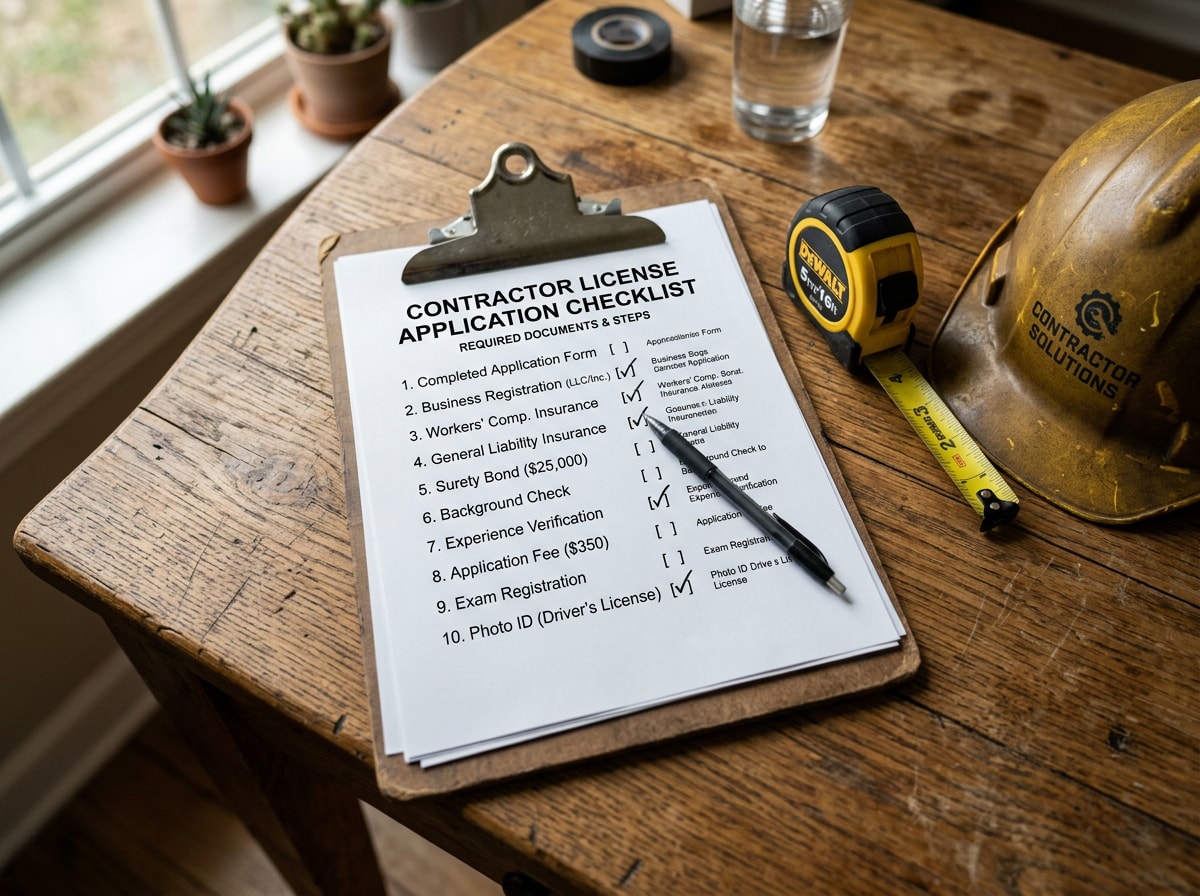
The CILB reviews every piece before issuing a license, but experience documentation is the slowest part for almost everyone. The rest of this guide focuses on that piece.
Experience Requirements for a Florida General Contractor License
The standard rule calls for four years of construction-related experience, with at least one of those years in a supervisory role such as foreman, superintendent, or project manager. The remaining three years can mix fieldwork, additional supervisory time, approved college credit, or military service.
This standard comes straight from state law. Under Florida Statute 489.111, an applicant qualifies with "a total of at least 4 years of active experience as a worker... or as a foreman," and at least one of those years must be served as a foreman.
Many applicants underestimate how closely the CILB scrutinizes that supervisory year. Four years on job sites isn't enough if none of that time involved directing other workers or making field-level decisions.
What Counts as Qualifying Experience
Not every hour on a job site counts toward the four-year total. Experience must be directly related to the license scope being sought, so time spent purely on specialty trade work often doesn't transfer toward a general contracting application.
DBPR verification checks submitted job titles, dates, and employer confirmation before counting that time. Foreman experience gets scrutinized closely, since applicants sometimes claim supervisory duties without documentation showing they actually directed other workers. If the board can't verify that claim, the time may get reclassified as standard field experience, which can quietly push an applicant below the four-year mark.
Commercial Experience Categories the CILB Requires
This is the part most guides skip. Florida's administrative code doesn't just ask for "construction experience." For the general and building contractor categories, the rule defines qualifying experience as commercial construction work and explicitly excludes storage, utility, and accessory structures like barns, carports, sheds, silos, tanks, and aircraft hangars.
On top of that, applicants generally need documented experience in four or more of these categories, per Florida's Administrative Code on contractor qualification:
- Foundations or slabs exceeding 20,000 square feet
- Masonry walls
- Steel erection
- Elevated slabs
- Column erection
- Formwork for structural reinforced concrete
A roster of residential remodels or pole-barn jobs, on its own, usually won't satisfy this rule for a Certified General Contractor application. Applicants coming from strictly residential or agricultural-building backgrounds often need to supplement their history with commercial-scale project experience before they can apply for unrestricted CGC scope.
Documenting Your Work History
Applicants who worked for multiple contractors need separate documentation from each employer covering their time there. A single letter from a current employer usually isn't enough if most of the qualifying experience happened somewhere else.
The standard proof package includes:
- A completed experience verification form signed by a supervising licensed contractor
- Tax records such as W-2s or 1099s confirming employment dates
- A detailed work-history log describing specific projects, structures, and responsibilities
Employer verification gets complicated when a former employer has closed or can't be reached. In those cases, affidavits from coworkers or supplemental records like permits pulled under an applicant's name can help fill the gap.
At Red Rock Constructions, our own field supervisors have assembled this exact kind of paperwork when building out licensure in new markets, and a missing signature or an unverifiable tax record is almost always what stalls an otherwise-qualified application. Gathering proof early, before scheduling an exam date, saves months later.
Approved Pathways: Combining Experience, Education, and Military Service
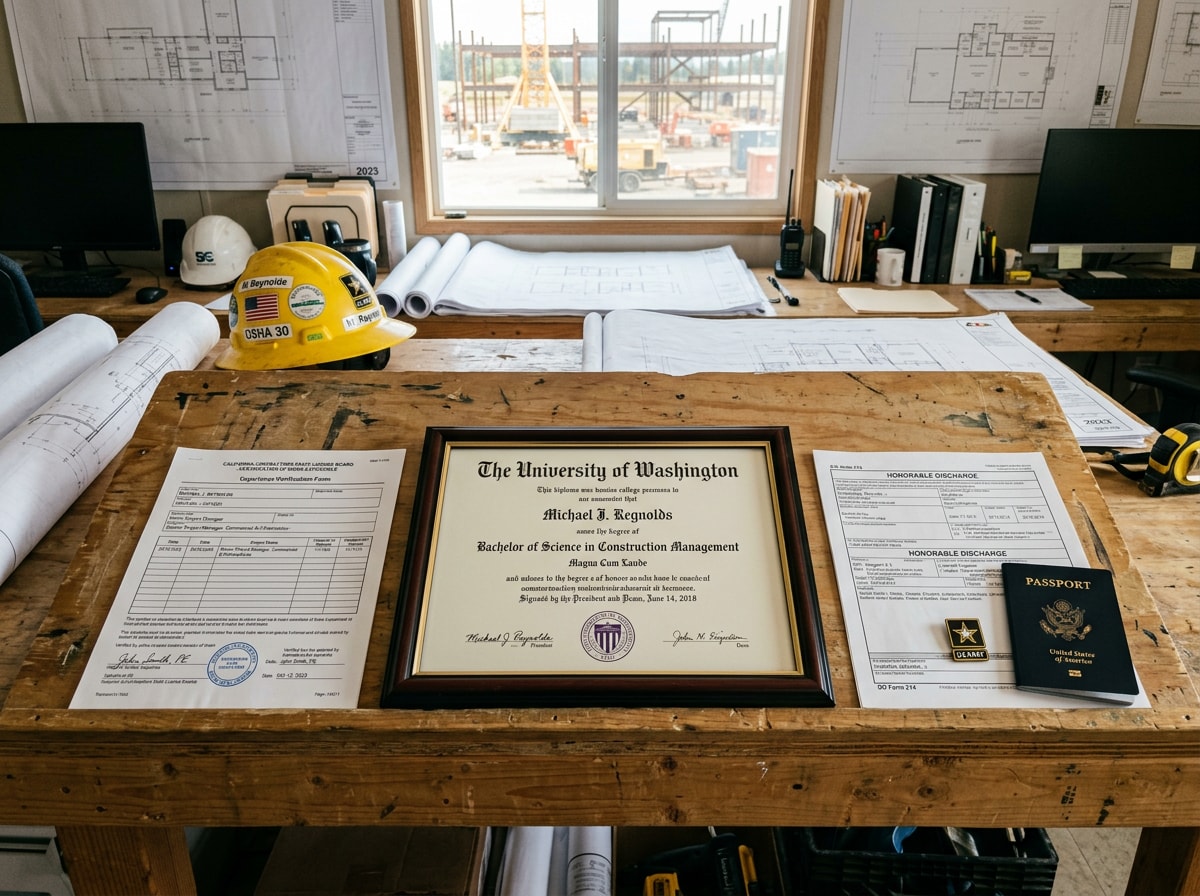
Florida doesn't require all four years to come from fieldwork. The CILB's official qualification forms outline several approved combinations of worker time, foreman time, college credit, and military service, all of which land on the same four-year total.
| Qualification Method | Worker Experience | Foreman Experience | Education or Military Credit | Total |
|---|---|---|---|---|
| Standard field path | Combined 4 years | At least 1 year | — | 4 years |
| Bachelor's degree path | — | 1 year | 4-year construction-related degree (counts as 3 years) | 4 years |
| Foreman + college credit | — | 1 year | 3 years of accredited college credit | 4 years |
| Worker + foreman + college | 1 year | 1 year | 2 years of accredited college credit | 4 years |
| Worker + foreman + college (field-heavy) | 2 years | 1 year | 1 year of accredited college credit | 4 years |
| Military service path | 2 years (worker or college credit) | 1 year | 1 year of military service | 4 years |
Credit amounts depend on how the CILB evaluates individual coursework or service records, so exact approvals aren't guaranteed before you submit. Here's how the math plays out: a candidate with one year as a foreman, one year as a general laborer, and a two-year associate's degree in building construction (counted as college credit) can land on the full four-year total without adding another year of fieldwork, assuming the board accepts the coursework as construction-related.
Certified vs. Registered General Contractor Licenses in Florida
Before working through experience rules, it helps to know which license you're actually pursuing. The documentation pathway stays similar, but where you can legally build does not.
A Certified General Contractor (CGC) can work statewide under a single license, while a Registered General Contractor (RGC) is limited to the local jurisdictions where they've been approved to practice. Most contractors with growth plans choose the CGC path.
Certified General Contractor (CGC)
The CGC license is the broadest credential the CILB issues, granting authority to work anywhere in Florida on projects of any size or value. Because that authority is statewide, the CILB holds every CGC applicant to the same experience standard regardless of where they plan to operate. You can see how a vetted general contractor handles licensing, permitting, and oversight across a project from start to finish, which is the same scope a CGC license is built to cover.
Beyond Experience: Credit, Insurance, and Background Checks
Experience is the piece that trips up the most applicants, but it isn't the only requirement the CILB checks.
- Credit score: Applicants generally need a FICO score of 660 or higher. Below that, most need to complete an approved 14-hour financial responsibility course and, in many cases, post a surety bond.
- Liability insurance: General and building contractors typically need to carry at least $300,000 in public liability and $50,000 in property damage coverage.
- Workers' compensation: Required if you have employees, or an exemption filing if you don't.
- Background check: Electronic fingerprinting through an FDLE-approved vendor is part of every application.
None of this replaces the experience requirement. It runs in parallel to it, and the CILB won't issue a license until every piece clears.
How to Get a Florida General Contractor License: Step-by-Step
Once experience and education requirements are confirmed, the rest of the process follows a fairly predictable sequence.
Step 1: Determine License Type
Settle on exactly which license category fits your business plans before registering for an exam. The CGC authorizes unlimited work statewide, a Certified Building Contractor (CBC) license covers similar statewide work but caps structures at a certain height, and specialty licenses restrict work to a single trade. Confirming this early avoids redoing experience documentation later.
Step 2: Confirm Your Experience Is Verifiable
Pull together employer verification forms, tax records, and a detailed project log before you go any further. This is the step covered in detail above, and it's the one most applicants underestimate.
Step 3: Register for the Florida Contractor Exam
Exam registration runs through Professional Testing, Inc., with computer-based testing scheduled through Pearson VUE. Registration currently runs $135, and individual exam sections typically run between $40 and $80 each, depending on which parts your license category requires.
Fees and scheduling windows shift over time, so confirm current pricing directly through Pearson VUE's Florida DBPR Construction exam page before locking in a test date. Most applicants wait to register until their experience documentation has already been reviewed, since there's little value in scheduling an exam before confirming the experience requirement is actually met.
Step 4: Submit Your Application to the DBPR
Once you've passed your exams, submit your full application package, including experience verification, financial documentation, and insurance proof, to Florida's Construction Industry Licensing Board. This is the stage where incomplete experience paperwork most often causes delays.
Step 5: Secure Insurance and Activate Your License
Once your application clears, finalize your general liability and workers' compensation coverage before the CILB issues an active license number.
If you're on the hiring side of this process rather than the licensing side, verifying a contractor's experience history is one of the fastest ways to confirm you're working with someone qualified. Our residential general contractor services guide covers what to check before you sign a contract. You can also get a free estimate from a team built on the same experience-first standards this guide covers, or start at our homepage to see our full scope of work.
FAQ
How Many Years of Experience Do I Need for a Florida Contractor License?
Four years of documented construction industry experience, with at least one year in a supervisory role such as foreman, superintendent, or project manager. The remaining three years can include fieldwork, additional supervisory time, or approved education and military credit.
What Counts as Supervisory or Foreman Experience?
Directing other workers, coordinating trades, or making field-level decisions on a job site, not just working under a foreman. The CILB looks for documentation showing the applicant actually held that authority, not just a job title.
What if My Experience Is From Another State, Will It Count in Florida?
Generally yes. Florida's administrative code allows experience from outside jurisdictions to count toward licensure as long as it's properly documented and doesn't come from work exempted under state law. You'll still need the same proof package required for in-state work: employer verification, tax records, and a detailed work history.
Does Military Service Count Toward the Experience Requirement?
Yes. The CILB accepts verified military service as part of several approved qualification pathways, typically combined with at least one year of foreman experience and some worker or college-credit time to reach the four-year total.
What Is the Difference Between a Certified and Registered General Contractor License in Florida?
A Certified General Contractor license provides statewide authority to work in any Florida jurisdiction. A Registered General Contractor license limits a contractor to specific local jurisdictions where they've been approved. Both require similar experience documentation, but the CGC's broader reach makes it the more common choice for contractors planning multi-county work.
What Credit Score Do I Need to Get a Florida Contractor License?
Most applicants need a FICO score of 660 or higher. If your score falls short, you'll typically need to complete a 14-hour financial responsibility course and may need to post a surety bond before the CILB will issue a license.
Is Continuing Education Required for General Contractors in Florida?
Yes. Florida requires 14 hours of continuing education every two years to renew a general contractor license, typically covering workplace safety, business practices, and Florida Building Code updates. Staying current matters just as much as meeting the initial experience threshold, since a lapsed license can create problems mid-project.