
Hiring remodeling contractors is the single decision that determines whether your renovation finishes on budget or turns into months of delays and change orders. The right contractor turns a stressful remodel into a manageable project, while the wrong one can cost you time, money, and peace of mind. This guide walks through finding qualified candidates, verifying licenses, asking the right questions, and spotting red flags before you ever sign a contract.
How Do I Find a Remodeling Contractor Near Me?
Start by asking people you trust. Friends, neighbors, and real estate agents often have firsthand experience with local remodeling contractors, and agents in particular tend to keep a running list of referrals built from past clients. A personal recommendation carries more weight than an online ad, because someone has already lived through the project.
Online research fills in the gaps. National trade organizations maintain directories of members who meet certain training or ethics standards. NARI connects the remodel-ready homeowner with ethical, professional remodeling contractors and provides its members cutting edge educational and networking opportunities. A quick search of a directory like that typically turns up several qualified names in your area, though availability and typical project types vary depending on where you live.
Once you have a short list, treat the search like a hiring process, because it is one. Ask for recommendations from people you trust, check that companies have licenses and insurance, and get three written estimates before you decide. If you want to see what a real body of completed remodeling work looks like before you start comparing bids, you can browse our project portfolio or learn more about our residential remodeling services.
What to Look for in a Remodeling Contractor
Finding candidates is only step one. The real work is evaluating whether a contractor's experience, style, and track record actually match your project before you commit.
Compare Contractor Portfolios
Not every contractor fits every project, even if they're skilled overall. A contractor who mostly does kitchens might not be the best fit for a bathroom renovation involving complex plumbing or ventilation work.
Ask for a portfolio covering at least the past year of completed work. A strong portfolio shows:
- Several projects similar in scope to yours
- Clear before-and-after photos
- Recent completion dates
- Finished work, not just renderings
A weak portfolio is thin, vague about completion dates, or filled with design renderings instead of finished rooms. That's often a sign of limited hands-on experience in your remodeling style.
Check References
References tell you what a portfolio can't. When you call past clients, ask direct questions: did the contractor finish on time, show up when scheduled, and stay within the agreed budget? Those three answers reveal more about reliability than almost anything a contractor will tell you about themselves.
Build a simple reference checklist before you call:
- Timeline — did the project finish on schedule?
- Punctuality — did the crew show up when promised?
- Budget — were there unexplained overages?
- Communication — were questions answered quickly?
If a reference's answers sound promising, ask to see the finished project in person. Walking through completed work lets you judge craftsmanship directly instead of relying on photos.
How Do I Check a Remodeling Contractor's License?
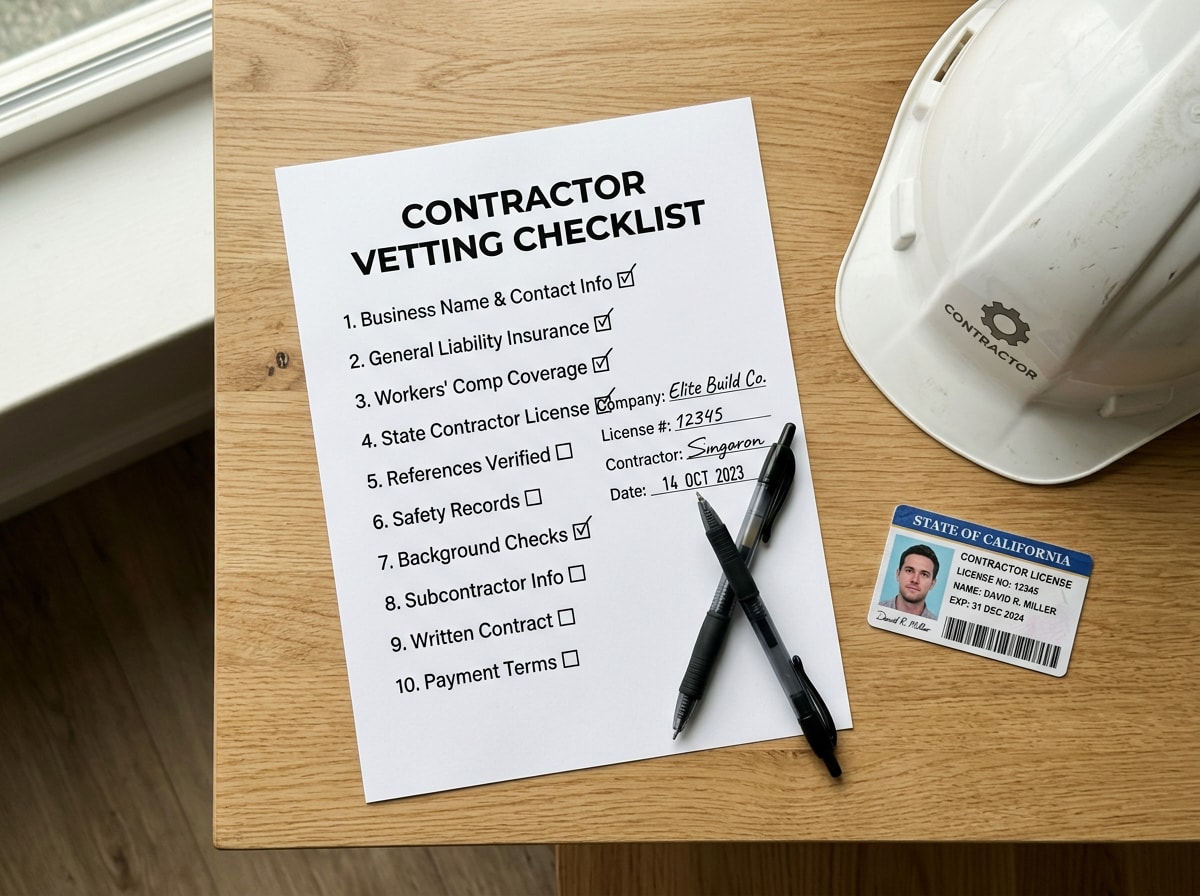
You can verify a license in three steps: find your state's licensing board online, search its database by the contractor's name or license number, and confirm the license is active with no unresolved complaints before you sign anything.
Contractor licensing is regulated by state, and sometimes local, licensing boards, since there is no federal contractor license.
Most states offer a free online lookup, but what's licensed varies by state, so always check your own state's board and pair the result with reviews and proof of current insurance. Requirements also shift by project type and location, what's required for a bathroom remodel in one town may differ in another. If you're unsure what applies to a specific area, reviewing our service area for Cody, WY can give you a sense of which local permits and requirements typically come into play.
If you'd rather use a resource built specifically for this task, the national organization that represents state licensing agencies encourages consumers to verify a contractor's license or registration, as required by their state, before hiring . Its consumer licensing resource library links out to the correct board for most states.
A license alone isn't the full picture. Ask to see proof of insurance and workers' compensation coverage alongside it, a contractor can be licensed and still carry inadequate coverage, which leaves you financially exposed if someone is injured on the job.

What Questions Should I Ask a Remodeler Before Signing a Contract?
Ask these directly, and expect clear answers to all of them:
- How long have you been in business?
- Who will actually work on the project, your employees or subcontractors?
- Will you handle permits and approvals?
- Are you licensed for this specific scope of work?
- Are you bonded, and how much insurance do you carry?
Those answers affect both quality and accountability once work begins. Bonding protects you if the home is damaged during the project, while insurance protects the contractor and crew.
Also ask for specifics in writing: a contract that spells out the full scope of work, a realistic timeline, and the total cost, including allowances for items like fixtures or finishes you haven't selected yet. Allowances matter because they set a budget ceiling for decisions still to come. In our own remodeling work across the Big Horn Basin and surrounding areas, going over an allowance on cabinetry or tile is one of the most common sources of mid-project cost overruns we see homeowners run into.
If you'd like a written quote to compare against other bids, request a free estimate and use it as a baseline for these conversations.
What Does It Cost to Hire a Remodeling Contractor?
Contractor pricing generally follows one of three models, and the right one depends on your project size and how well-defined the scope is already.
| Pricing Model | Best For | How It Works | Watch For |
|---|---|---|---|
| Hourly rate | Small repairs, punch-list items | Billed per hour plus materials | Hours can run long without a cap |
| Percentage markup | Larger renovations with a design-build team | Fee is a percentage of total material and labor cost | Markup rises if material costs climb mid-project |
| Fixed bid | Defined-scope remodels (kitchen, bath, addition) | A single price covers the full agreed scope | Anything outside the original scope becomes a paid change order |
Hourly rates suit minor repairs, while fixed bids offer more budget certainty on bigger remodels. Percentage-based pricing can shift with material costs, so ask which model a contractor uses before comparing quotes side by side. For a sense of how much specific remodeling projects typically cost nationally and how much value they tend to return, the Cost vs. Value report lets remodelers, homeowners, and real estate professionals compare the average cost of dozens of remodeling projects against how much value those projects retain at resale , which is a useful sanity check before you accept a bid.
Red Flags to Avoid When Hiring a Remodeling Contractor
If a contractor can't produce proof of a valid, current license, treat it as a serious warning sign rather than minor paperwork. Working with an unlicensed contractor can void insurance claims, create liability for injuries on your property, and leave you with no recourse if the work fails inspection.
Payment demands are another common warning sign:
- Cash-only payment requests
- A large deposit before any work starts
- Pressure to sign immediately
- No fixed business address
- Reluctance to provide references
- Vague or missing written estimates
Scammers will promise to do the work, but leave you and your home worse off than when you started.
The FTC logged more than 81,000 reports of home improvement fraud in a single recent year alone , which is a reminder that this isn't a rare problem. Legitimate remodeling contractors are generally comfortable with standard payment schedules tied to project milestones. For broader guidance on spotting these tactics before you sign anything, the FTC's guide on avoiding home improvement scams covers common warning signs in detail.
Frequently Asked Questions
What's the Difference Between a Remodeling Contractor and a General Contractor?
A remodeling contractor typically focuses on updating existing spaces, such as kitchens, bathrooms, and basements, while a general contractor more often oversees larger-scope projects or new construction involving multiple trades. Many professionals handle both, so the right choice depends on your project's scope rather than the title on their license. If you're still deciding which type of pro fits your job, our guide to residential general contractor services breaks down what each role typically covers.
How Much Do Remodeling Contractors Charge?
Pricing generally follows an hourly rate for small jobs, a percentage markup for larger renovations, or a fixed bid covering the full scope of work. See the pricing table above for how each model works and what to watch for.
How Long Does a Home Remodel Take?
Timelines depend heavily on project size and complexity. A single-room update, like a bathroom refresh, often takes a few weeks, while a multi-room remodel or whole-home renovation can stretch several months. Permitting adds time too, since approval can take anywhere from a few days to several weeks depending on your local building department.
Do Remodeling Contractors Need to Be Licensed and Insured?
Yes, in most states and municipalities. Licensing requirements are set at the state or local level and vary by project type, so a license needed for a structural renovation may differ from one needed for cosmetic work. Insurance protects both you and the crew if something goes wrong, which is why verifying both before work starts matters.
How Much Deposit Should I Pay a Remodeling Contractor Upfront?
A reasonable deposit is typically a small fraction of the total project cost, with the rest tied to milestones as work is completed. If a contractor asks for most or all of the payment before starting, treat that as a warning sign rather than a standard practice.
How Do I Know If a Remodeling Contractor Is Legitimate?
Confirm an active license with your state's board, ask for proof of insurance, and call at least two references who had similar work done recently. A legitimate contractor will provide all three without hesitation.
Ready to get a clear, written quote for your project? Visit {{SITE_URL}} to see our full range of services, or get your free estimate and use it as the benchmark for every other bid you collect.