Hiring the right multifamily general contractor decides whether your apartment project finishes on budget or spirals into change orders, missed deadlines, and lease-up delays. Developers who skip the vetting step almost always pay for it later, through disputes or work that doesn't hold up. This guide breaks down what a multifamily GC actually does, how to vet one, and what to lock into the contract before ground breaks.
The Role of a General Contractor in Multifamily Construction
A multifamily general contractor oversees the day-to-day execution of apartment construction, translating architectural plans into a finished building.
The GC's core responsibilities include reviewing design documents, securing permitting, hiring and managing subcontractors, and purchasing materials and supplies.
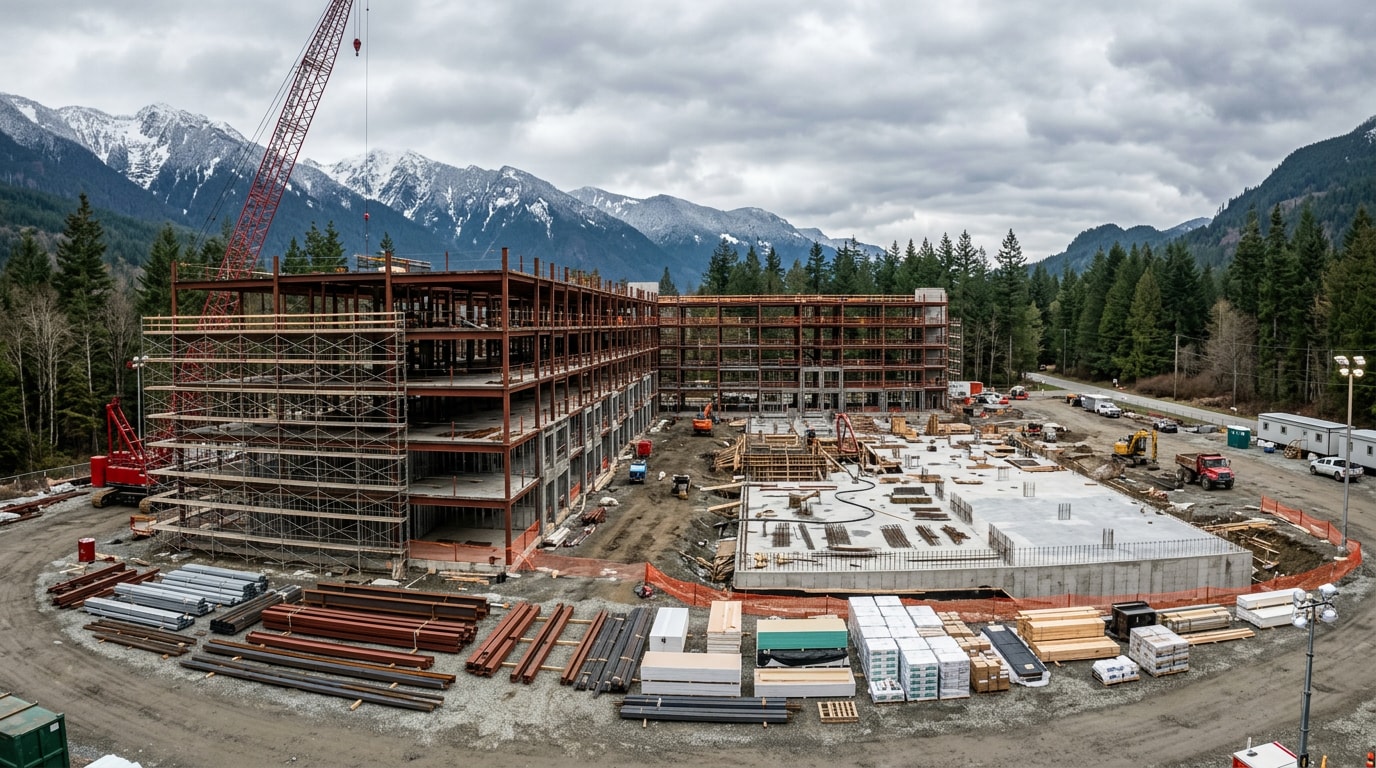
On a multifamily job, this role carries more weight than it does on a single-family build. The GC coordinates dozens of subcontractors across electrical, plumbing, framing, and finish work, often across multiple buildings or phases at once. Permitting alone can involve several overlapping jurisdictions depending on the project's location and unit count.
Understanding this scope matters before you start comparing bids. For a closer look at how these responsibilities play out on real jobs, see our general contractor services overview, including dedicated project management support.
Strong Pre-Construction Services
The best multifamily general contractors get involved long before the first shovel hits dirt. Strong pre-construction services typically include:
- Budget development — a realistic cost model built before design is finalized
- Value engineering — swapping materials or methods without sacrificing quality
- Scheduling — a sequenced timeline that accounts for permitting and long-lead items
- Constructability review — catching design conflicts on paper instead of on-site
- Risk assessment — flagging site conditions, supply issues, or code questions early
Bringing a GC in before final drawings are locked gives them room to flag problems while changes are still cheap. Waiting until drawings are finished removes that opportunity entirely.
Multifamily Construction Challenges Unique to Wyoming and Montana Markets
National guides on vetting a multifamily GC rarely mention rural mountain-region conditions, but they change the math on a project.
In the Bighorn Basin and south-central Montana, frost depth runs deeper than in most of the country, which means footings and foundation walls typically need to go deeper than a developer coming from a milder climate might budget for. That's a conversation worth having with your concrete foundation crew during pre-construction, not after excavation starts.
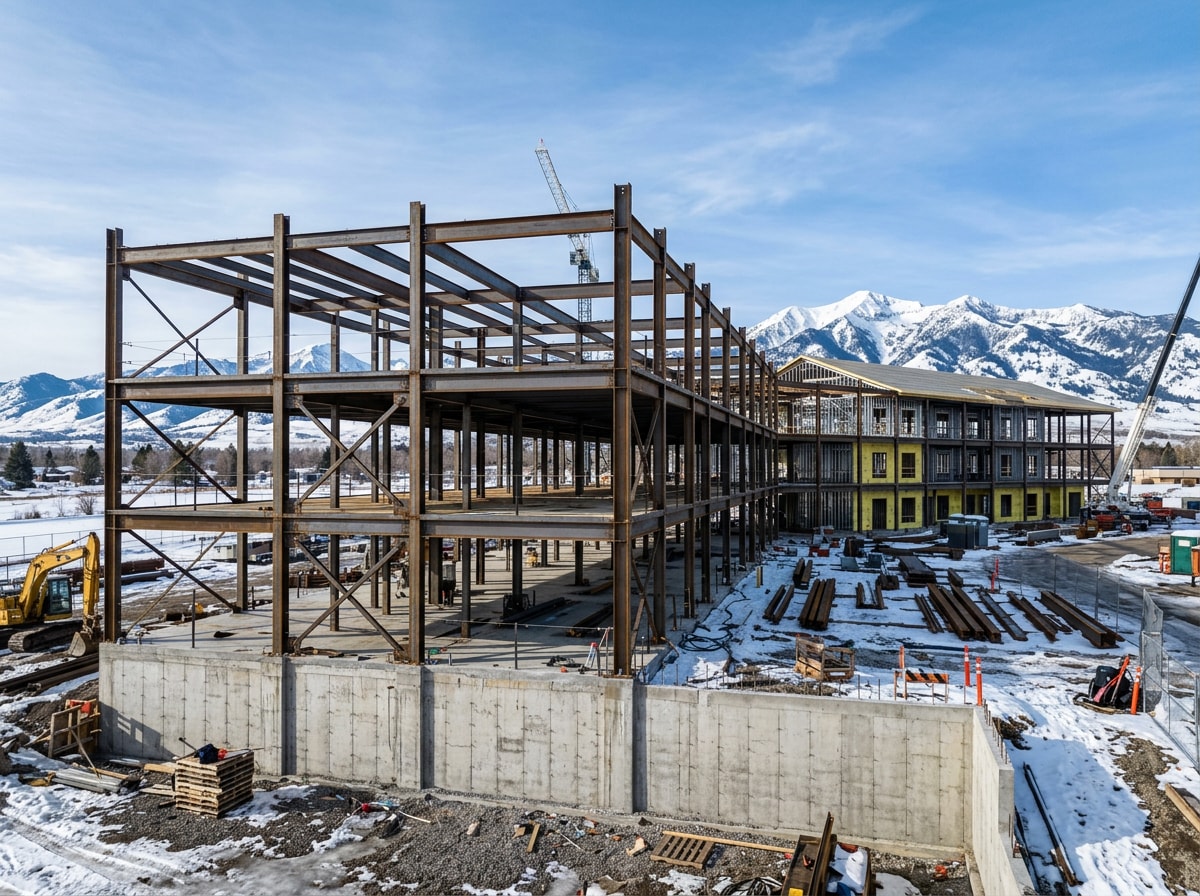
Material lead times also run longer here than in a metro market with multiple regional suppliers. A GC who hasn't built in Powell, Cody, Billings, Sheridan, Red Lodge, Worland, Greybull, or Lovell may not account for the extra weeks it takes to get structural steel or specialty finishes delivered. Steel-framed systems are common for multifamily and workforce housing in this region because they handle snow load well and shorten the weather-exposed phase of a build. Our steel framing and site preparation teams plan around both of these realities on every project.
The labor pool is also smaller and more regional. A contractor who only builds in one town may not have the subcontractor relationships to staff a multifamily job on schedule. Ask any GC you're vetting where their trade crews are based and how far they're willing to travel for your project.
Selecting a Quality Multifamily General Contractor
Knowing how to choose a multifamily general contractor comes down to a handful of recurring checkpoints. The following sub-factors make up a practical contractor evaluation checklist for vetting a GC before you sign anything.
Experience in Multifamily Projects
Not every general contractor has the systems to handle multifamily work well. Multifamily experience matters because renovations and new builds alike involve multiple occupied or soon-to-be-occupied units, staggered timelines, and ongoing tenant coordination that single-family contractors rarely face.
Ask to see the contractor's portfolio and evaluate both the number and the complexity of completed multifamily projects. A contractor who has only handled small jobs may struggle with the complexity of a 150-unit build. Familiarity with multifamily-specific codes, fire separation requirements, and accessibility regulations is a strong signal of real experience. Browse our completed projects to see examples of finished scope.
Reputation, Past Projects, and References
Request at least three contractor references and actually call them. A phone conversation reveals far more than a polished list of past projects on a website ever will. When you call, ask:
- Did the project finish on time?
- Did unexpected costs come up, and how were they handled?
- How did the contractor respond when problems arose?
- Did the finished work match expectations?
This reputation check is one of the few steps that genuinely separates strong contractors from mediocre ones.
Licensing, Insurance, and Credentials
A licensed and insured contractor is non-negotiable, but requirements vary by state and even by city, so don't assume one license covers every jurisdiction where you build. Confirm the license is active through your state's contractor licensing board. The National Association of State Contractors Licensing Agencies maintains contractor state licensing information covering all 50 states , which is a useful starting point if you aren't sure which board governs your project.
Two insurance types matter most:
- Liability insurance — protects you if property is damaged or someone is injured on-site
- Workers' compensation — covers injured workers without exposing you to medical costs or lost-wage claims
Ask about bonding as well. A bonded contractor gives you a financial backstop if they fail to complete the work as agreed.
Project Management, Scheduling, and Communication
A well-defined project management process shows up in clear timelines, regular progress updates, and efficient use of labor and materials. Experienced GCs build detailed construction schedules, coordinate trade partners, and monitor progress daily to avoid costly downtime between trades.
Consistent communication looks like scheduled updates, transparent reporting on budget and timeline, prompt responses to questions, and a willingness to raise problems before they grow. If a contractor is vague about how they'll keep you informed during the interview, expect that pattern to continue once the project starts.
Cost and Budget Management When Choosing a General Contractor
Cost matters, but choosing a contractor based purely on the lowest bid is one of the more common and expensive mistakes developers make. Low bids often come with vague scope definitions, which later surface as cost overruns and change orders once work is underway.
It also helps to understand the fee structure you're agreeing to before you compare bids:
| Fee Structure | How It Works | Who Carries the Risk |
|---|---|---|
| Fixed-fee | One set price for a defined scope | Contractor absorbs cost overruns on defined scope |
| GMP (guaranteed maximum price) | Costs are capped; savings may be shared | Shared, with a ceiling protecting the owner |
| Cost-plus | Owner reimburses actual costs plus a fee | Owner carries more cost risk, more transparency |
A general contractor usually charges a fee of 10 to 20% of the total project cost, on top of the subcontracts, materials and labor bought for the job , though that figure shifts with project size, complexity, and region. Treat any quoted fee as a starting point for negotiation, not a fixed industry rule.
To sanity-check whether a bid reflects realistic regional pricing, it helps to know where the broader market sits. The U.S. Census Bureau publishes monthly construction spending data that tracks national residential and nonresidential construction activity, useful context when a bid looks unusually high or low compared to current trends.
General Contractors and Multifamily Construction Loans
Lenders care about GC selection because a construction loan is directly tied to project timing. Many loans come with a takeout commitment, a set window during which permanent financing replaces the construction loan.
Because that timeline is fixed, it's in both the lender's and the borrower's interest that the general contractor finishes on schedule. Some lenders maintain lists of pre-approved contractors with a track record of hitting deadlines on financed projects. This isn't universal practice, so confirm directly with your lender whether contractor approval is part of their process.
The Importance of Contracts When Choosing a General Contractor
A solid construction contract should spell out the full scope of work, the payment schedule, the change order process, and warranty terms in plain language, not vague allowances. Ambiguity in any of these areas tends to surface as a dispute later, usually at the worst possible time.
Standardized contract templates, such as those published through AIA Contract Documents, offer a useful baseline for what a well-structured agreement typically includes. Even if you don't use a standard form directly, comparing your contractor's draft against one can reveal gaps worth negotiating before signing.
When Choosing a General Contractor, Homework Is Key
Choosing the right contractor rewards patience. Research multiple firms, check references thoroughly, and compare bids line by line rather than focusing on the bottom number alone.
This due diligence takes time upfront, but it's far cheaper than fixing a bad hire mid-project. If you want help applying this checklist to a specific apartment or workforce-housing project in the Bighorn Basin or south-central Montana, our team can walk through scope and budget with you. Get a free estimate before you commit to a contractor.
Our project managers at Red Rock Constructions have coordinated commercial and multifamily-style builds throughout Powell, Cody, Billings, Sheridan, Red Lodge, Worland, Greybull, and Lovell, from poured foundations through steel framing and final walkthrough. If you're also weighing a general contractor for a different build type, our guide on finding the right commercial general contractor near me covers the same vetting checklist applied to standalone commercial projects.
FAQ
What qualifications should I look for when selecting a general contractor for a multifamily construction project?
Look for reliability, trustworthiness, strong communication skills, and financial responsibility. A good GC also knows how to manage relationships between city officials, architects, lenders, and subcontractors throughout the project.
What is a general contractor responsible for in multifamily construction?
A multifamily GC reviews design plans, secures permitting, hires and manages subcontractors, and purchases materials and supplies. They serve as the central point of coordination from pre-construction through project completion.
How much does it cost to hire a general contractor?
GC fees are commonly quoted in the 10-20% range of total project cost, though the exact figure depends on fee structure, project size, and regional market conditions. Fixed-fee, GMP, and cost-plus arrangements each affect how that fee is calculated and billed.
How do I choose the right general contractor for my multifamily construction project?
Evaluate multifamily experience, check references on past projects, confirm licensing and insurance, and assess communication practices before signing. Use the contractor evaluation checklist above for a full breakdown of each factor.
How do I find a reputable multifamily general contractor near me?
Start with word-of-mouth referrals from other developers or owners of similar projects, then check local or county permit records to see which contractors actually built properties you admire. Confirm licensing with your state's board before adding anyone to your shortlist.
Is multifamily construction considered commercial or residential construction?
Even though multifamily buildings house families, they're generally treated as commercial construction in the building code and investment world because of their scale, shared systems, and the building codes that apply. That distinction affects which contractors are qualified to bid the work.