A commercial general contractor near me search is the easy part. Picking the right firm for a build with tenant deadlines, code inspections, and six or seven figures of capital on the line is the hard part. This guide breaks down what a commercial GC actually does, the exact questions to ask before you sign anything, and how to score bids so the lowest number doesn't talk you into the wrong hire.
What a Commercial General Contractor Does (And Why Commercial Work Plays by Different Rules)
A commercial general contractor manages day-to-day site operations: scheduling bonded subcontractors, coordinating inspections, and carrying insurance limits sized for commercial risk instead of residential risk. The team at Red Rock Constructions handles this across our general contractor services for offices, retail buildouts, and industrial sites throughout Wyoming and Montana.
Commercial construction differs from residential work mainly through stricter code enforcement, mandatory accessibility compliance, and bonded-subcontractor requirements tied to larger insurance limits. These rules exist because commercial buildings serve the public, not just one household, so the regulatory bar sits higher at every stage.
Accessibility isn't optional. Commercial facilities need only comply with requirements of the ADA Standards for Accessible Design, and examples of commercial facilities include office buildings, warehouses, and factories. A GC has to design to those standards on day one, not retrofit them later.
Building code enforcement is also heavier on commercial projects. The International Codes, developed by the International Code Council, are a family of fifteen coordinated, modern building safety codes, and they're the most widely used and adopted set of model codes in the world. Zoning review, fire suppression sign-off, and occupancy limits get checked far more closely on a commercial permit than a residential one.
Step-by-Step Framework for Choosing a Commercial General Contractor
Four questions tend to decide most GC selections: is the contractor properly licensed and bonded, do they have real experience in your building type, what do their references actually say, and are they financially stable enough to finish the job? Work through each one before you request a bid.
Browse contractors active in your area through our service areas before you narrow a shortlist.
Verify Licensing, Insurance, and Bonding
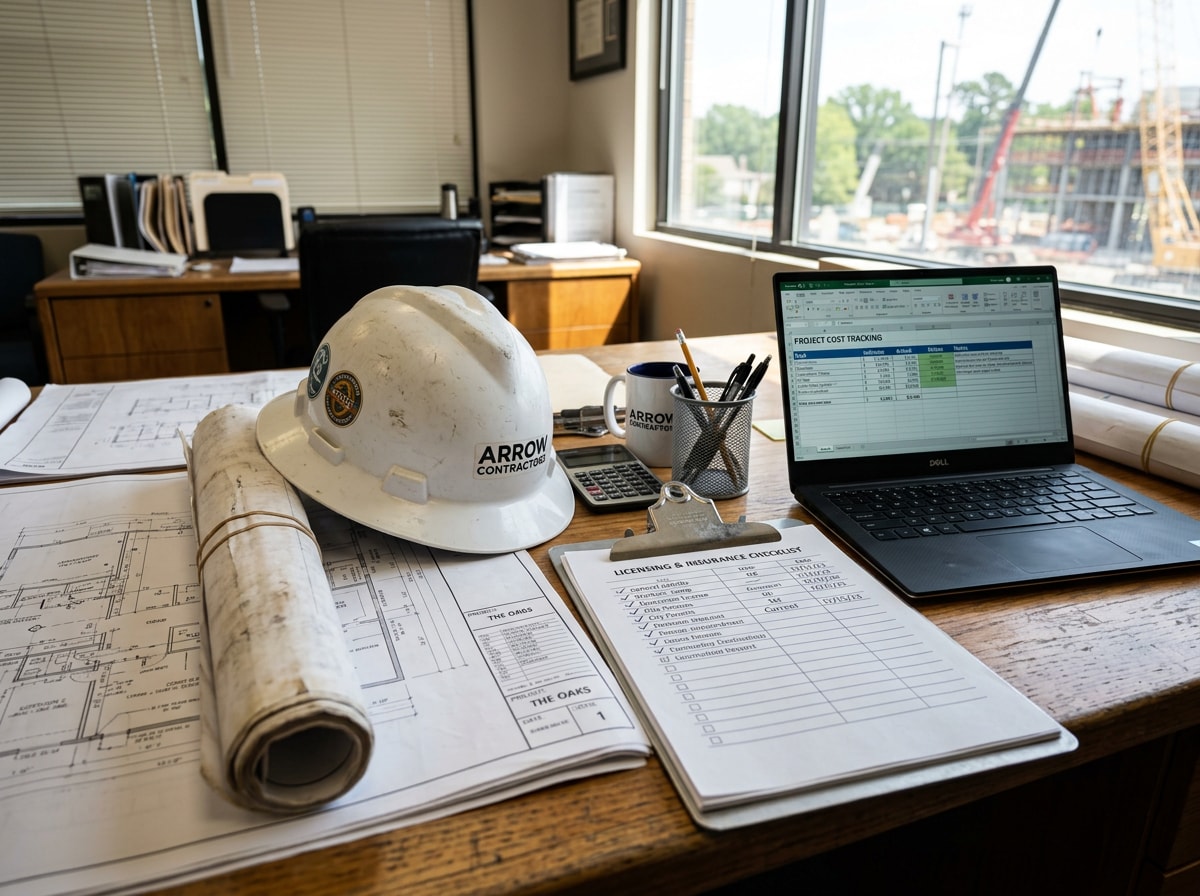
Start by requesting three documents: an active state or local license number, a current certificate of insurance, and a bonding letter from their surety. These confirm the contractor can legally operate, is covered if something goes wrong, and has financial backing to complete the scope.
Commercial insurance limits run far higher than residential policies, often into the millions per occurrence, so don't assume a contractor's standard coverage qualifies. Ask about their Experience Modification Rate (EMR) too. An EMR below 1.0 is generally considered a good score associated with cost savings, while an EMR above 1.0 is associated with higher premiums.
You can also check a contractor's safety enforcement history directly. OSHA's Establishment Search tool lets you search the agency's enforcement database by establishment name, and it covers more than three million inspections conducted since 1972. You can run that search yourself through the OSHA Establishment Search tool.
Confirm Relevant Commercial Experience
"Twenty years in business" means little if those years weren't spent building what you need. A restaurant buildout, an office interior renovation, and an industrial warehouse each demand different trade mixes, permitting knowledge, and schedule tolerances.
| Project Type | Key Portfolio Evidence to Request | Common Risk Areas |
|---|---|---|
| Restaurant/Retail | Grease trap and hood installs, health department sign-offs | Fast-track schedules, tenant improvement allowances |
| Office Interiors | ADA restroom layouts, acoustic/ceiling work, phased occupancy | Working around active tenants |
| Industrial/Warehouse | Heavy equipment foundations, dock leveler installs, fire suppression | Longer lead times, specialized subs |
Ask for a portfolio that matches your exact building category, not a general brochure. Our commercial construction and new construction pages break down past work by building type.
Check References and Online Reputation
Don't stop at the references a contractor hands you. Ask for one or two they didn't volunteer, such as a recent subcontractor or a past client from a similarly sized project.
Call them and ask directly: Did the project finish on schedule? Did costs stay within the original bid? Would you hire this contractor again? Pair that conversation with a quick look at online reviews and any pending litigation searchable through county court records.
Test Financial Strength and Bonding Capacity
A contractor can be skilled and still run out of working capital mid-project if they've overextended themselves. Two numbers help here: the working capital ratio, which shows available cash against short-term liabilities, and the backlog ratio, which compares committed future work to current revenue capacity.
Bonding capacity is a useful shortcut, since sureties already vet financial stability before issuing a bond. A surety examines a contractor's expertise in the work, character, ability to work in the region where the project is located, current work in progress, and overall management as well as its capital and record of paying its obligations before extending that bond. The Surety & Fidelity Association of America publishes plain-language resources on how bonding decisions get made if you want to understand the underwriting side further.
Comparing Bids and Finalizing Your Decision
Once you've narrowed finalists, resist picking the lowest number automatically. A thorough bid comparison weighs price against scope, schedule, and risk. Lowest bid and best value rarely mean the same thing.
What to Expect in a Bid, and the Contract Type Behind It
A complete bid should include a line-item cost breakdown, a projected timeline, and a clearly written scope of work. Vague bids are a red flag regardless of price. If a bid skips any of these, ask for a revision before comparing it against competitors.
The contract structure behind the number matters just as much as the total:
| Contract Type | Best For | Price Risk |
|---|---|---|
| Lump Sum | Fully defined scope, finished drawings | Fixed price; contractor absorbs overruns |
| Guaranteed Maximum Price (GMP) | Design still evolving, fast-track schedules | Capped price; savings often shared |
| Design-Build | Owner wants one point of contact for design and construction | Price set collaboratively as design finalizes |
Negotiation isn't only about price. Push on timeline guarantees, change-order documentation requirements, and what happens if material costs shift mid-project. A contractor willing to spell these out in writing is usually more trustworthy than one who resists.
Score, Don't Just Pick: Using a Weighted Decision Matrix
Build a simple scorecard instead of ranking by price alone.
- List criteria: commercial experience, safety record, financial stability, reference feedback, schedule confidence, and price.
- Assign each a weight based on what matters most for your project.
- Score each finalist from 1 to 5 on every category, multiply by the weight, and total the results.
This surfaces total value versus lowest bid clearly, and gives you a documented rationale if stakeholders later ask why you didn't choose the cheapest option.
How to Hire a Commercial General Contractor: The Process After You Choose
Once you've selected a finalist, the hand-off typically starts with a letter of intent confirming scope and price while the formal contract is drafted. Next comes the contract form itself, chosen from the table above based on how settled your design is.
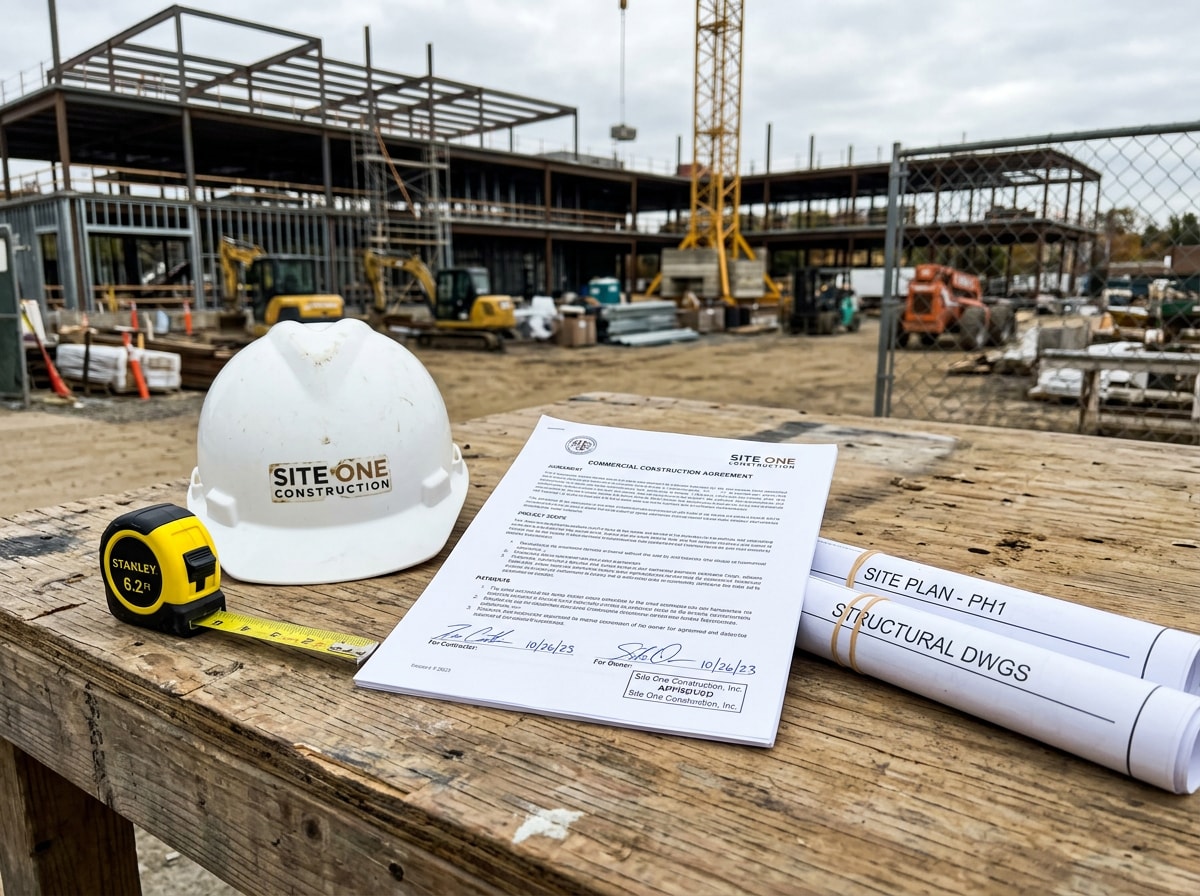
Request a schedule of values that breaks the contract price into payment milestones tied to completed work, and confirm updated insurance certificates are on file before mobilization. These steps protect both sides and keep payment disputes to a minimum. Ready to start the conversation? Get a free estimate and we'll walk through scope, schedule, and budget together.
Where We Build: Commercial Projects Across Wyoming and Montana
Hiring locally changes the math on a commercial build. On projects we've completed across Powell, Cody, and Billings, the contractors who finish on budget are the ones who line up steel, concrete, and roofing subs before the permit even clears. Waiting until after permitting costs real weeks in a region where specialty subs are thin on the ground and the nearest fabrication yards can be hours away.
That same logistics problem shows up on smaller projects too. If you're weighing a ground-up build at a smaller scale, our breakdown of tiny home builders in Cody, WY covers permitting and sourcing issues that overlap with commercial work in the same counties.
We also serve Sheridan, Red Lodge, Worland, Greybull, and Lovell, handling everything from site preparation and project management to commercial roofing and concrete foundation work on industrial and agricultural builds. Review completed work on our projects page before you request a bid.
FAQ
How Do I Find a Commercial General Contractor Near Me?
Start with your state or local licensing board to confirm active status, then cross-check insurance and bonding directly with the contractor's carrier and surety, not a copy the contractor hands you. Narrow your list to firms with completed projects in your specific building type, and call at least one reference the contractor didn't volunteer.
What Is the Difference Between a Commercial Contractor and a General Contractor?
A general contractor is a broad term that can apply to residential or commercial work. A commercial contractor usually specializes in non-residential, code-heavy builds like offices, retail, or industrial facilities, and typically carries higher insurance limits and more experience with zoning and accessibility compliance.
How Much Does a Commercial General Contractor Cost?
Commercial GC fees are commonly structured as a percentage of total construction cost, often cited in the range of 10 to 20 percent, though this varies by region and project complexity. The total cost also depends heavily on contract type, project scope, and whether the delivery model is design-bid-build, GMP, or design-build.
How Do I Verify That a Contractor Is Licensed and Insured?
Search your state or local licensing board's public database, which lists active licenses and any disciplinary history. Then request a certificate of insurance directly from the contractor's insurance provider rather than relying on a copy the contractor supplies themselves, since this confirms the policy is currently active.
What's the Difference Between Lump Sum, GMP, and Design-Build Contracts?
Lump sum works best when drawings are finished and scope is fixed, with the contractor absorbing any overruns. A GMP caps the price while some design details are still being finalized. Design-build gives you one point of contact for both design and construction, with price set as the design firms up.
What Should I Ask a Commercial General Contractor Before Hiring Them?
Ask who supervises the site daily, how change orders are priced and approved, and what the contractor's current EMR is. Ask to speak with three references from projects similar to yours. This short list surfaces red flags before you sign anything.