A hospitality general contractor manages the planning, permitting, and construction of hotels, resorts, lodges, and restaurants built for paying guests. The job is different from standard commercial work because the building usually has to stay open, staffed, and sellable while crews are inside it. Here's what that actually involves, what it costs in 2026, and how to vet a contractor before you sign anything.
What Is a Hospitality General Contractor?
A hospitality general contractor coordinates ground-up hotel builds, full and partial renovations, brand conversions, and restaurant buildouts. The scope spans design, permitting, subcontractor sequencing, and inspections, all built around one constraint: the property keeps operating.
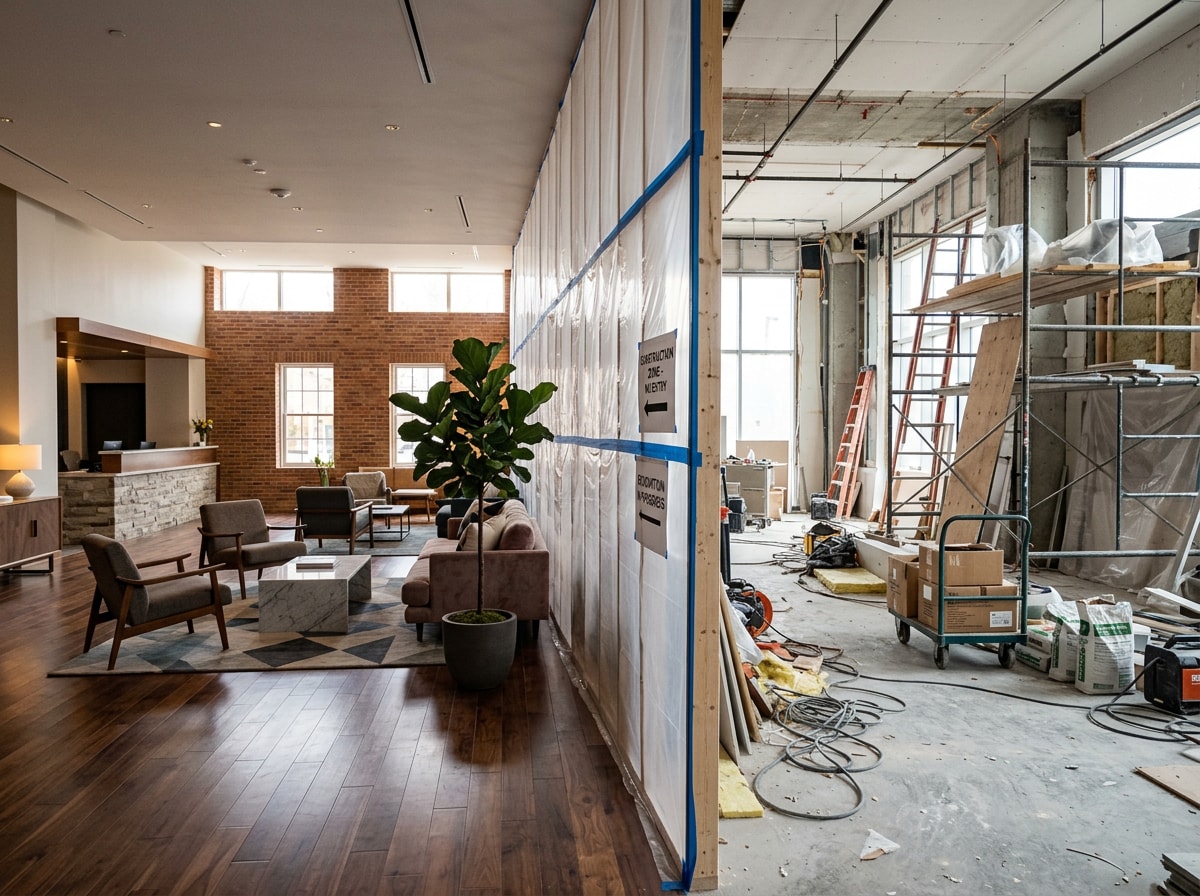
That constraint is what separates the trade from office or retail construction. A hotel is a working business every single day a crew is on site. So the honest answer to "what does a hospitality GC do" is more than swinging hammers. It's sequencing work so paying guests never see a dumpster where a lobby should be.
Franchise relationships add another layer. A property improvement plan (PIP) is the brand's mandatory renovation scope for any hotel entering or remaining in a franchise system. A hospitality GC has to read that PIP, price it, and execute it without violating the franchisor's design standards.
A modern hotel renovation contractor also coordinates design teams, structural engineers, FF&E vendors, and the property's own operations staff at the same time. Done well, that juggling act protects both the nightly guest experience and the owner's long-term asset value.
What Does Hospitality Construction Cost in 2026?
Cost is usually the first question owners ask, and it's the one most service pages answer vaguely. Here's where the real numbers land.
HVS's survey reports median development costs at $213,000 per room, with luxury projects exceeding $1.6 million per key. That's for new ground-up construction, and it includes land, FF&E, and soft costs, not just the GC's hard-cost scope.
Renovation costs driven by a PIP run on a separate scale. PIP costs for guest rooms typically run $8,000 to $25,000 per key depending on chain scale and the age of the existing product, with public space and building exterior work layered on top. For a full midmarket renovation covering rooms and public space, PIPs now cost between $35,000 and $40,000 per key for midmarket properties according to Hunter Hotel Advisors, reported via HFTP.
FF&E is its own line item, separate from construction. FF&E typically runs $25,000 to $48,000 per key on select-service and $55,000 to $135,000 per key on full-service and upscale.
| Project Type | Typical 2026 Cost Range |
|---|---|
| New hotel construction, overall median | ~$213,000 per key |
| New hotel construction, luxury segment | $1.6 million+ per key |
| PIP, guest rooms only | $8,000–$25,000 per key |
| PIP, full midmarket (rooms + public space) | $35,000–$40,000+ per key |
| FF&E, select-service | $25,000–$48,000 per key |
| FF&E, full-service/upscale | $55,000–$135,000 per key |
One more number worth knowing before you budget: hard construction costs (the general contractor's scope, excluding land, soft costs, and FF&E) typically represent 55% to 65% of total development cost. If your contractor's bid is wildly outside that band relative to your total project cost, ask why.
What Hospitality Construction Projects Include
Hospitality construction ranges from a cosmetic refresh to a full repositioning that touches every system in the building. Typical scope areas include:
- Guest rooms, suites, and corridors
- Restaurants, bars, and lobbies
- Ballrooms and meeting space
- Fitness centers and back-of-house areas
- ADA modifications and MEP upgrades
- Roofing, siding, and exterior envelope work
Restaurant and bar construction inside a hotel adds another layer, since it has to meet standalone restaurant code requirements on top of the constraints of an operating property. If you're scoping a hotel F&B buildout specifically, our restaurant construction guide breaks down that process and cost range in more detail. For the full range of structural and sitework services a hospitality project touches, see our general contractor services overview.
New Hotel Construction vs. Renovation: Brand Standards and Historic Properties
Ground-up hotel construction almost always means building to a franchisor's published prototype, a standards document dictating room layouts, finish schedules, mechanical specs, and exterior signage. A select-service hotel built to prototype generally takes well over a year, often 14 to 20 months from groundbreaking to certificate of occupancy.
Heritage and adaptive-reuse projects add difficulty. The general contractor has to coordinate structural upgrades, acoustic treatments, and life-safety improvements to meet current codes without erasing the historic character that makes the property marketable. The scope covers repair, alteration, addition and change of occupancy for existing buildings and historic buildings, while achieving appropriate levels of safety without requiring full compliance with the new construction requirements contained in the other I-Codes. That's the framework the International Code Council's existing building code provides, and it's why adaptive-reuse hotel work takes longer to permit than a typical remodel.
This is also why brand-flag experience matters when you're choosing a contractor. Not every commercial builder has navigated a franchisor's design review board or a local landmark commission. For ground-up and large-scale conversions, our new construction and commercial construction teams handle that coordination directly.
Design-Build vs. Traditional Delivery for Hospitality Projects
Design-build is the delivery model where the designer and contractor operate as one team from the earliest schematic phase, instead of handing a finished design across the fence to a separate builder. For hospitality projects, this is often the faster path because it compresses the time between concept and construction.
That matters across the full project lifecycle, especially when a hotel is only partially closed during the work. Specialized firms lean on pre-construction planning and tight project management to keep phased renovations on schedule while rooms stay sellable.
Owners evaluating a design-build approach should ask a contractor how they've phased work around occupied floors in past projects. The answer reveals more than any proposal document will.
FF&E Coordination: The Line Item Most Generalists Get Wrong
FF&E routinely represents a significant share of a hospitality project's budget and schedule. Beds, casegoods, lighting, and soft seating all have their own lead times, and a late shipment can hold up a room inspection even when construction itself is finished.
This is where hospitality construction diverges sharply from most other commercial work. Office buildouts rely mostly on the architecture itself to deliver the experience. In a hotel, a large share of what guests actually feel comes from movable items the GC doesn't manufacture but still has to schedule around.
Commercial-grade FF&E also has to meet durability and safety benchmarks. Consumers can take the comfort, safety, and durability of their commercial furniture for granted in large part because of the voluntary standards adopted by the business and institutional furniture industry. The relevant standard for hotel lobby and lounge seating is ANSI/BIFMA X5.4, Public and Lounge Seating, which most commercial manufacturers build to.
Coordinating the FF&E timeline against the construction schedule, rather than treating it as a separate workstream, is one of the clearest signs of a hospitality specialist versus a generalist contractor.
Hospitality Construction in Yellowstone Gateway Markets
Most national guides on this topic are written for major metro markets. That's not the whole picture.
In gateway towns like Cody, WY and Sheridan, WY, hotel occupancy is driven hard by Yellowstone and Bighorn tourism season, which runs roughly May through September. That leaves a narrow shoulder-season window, generally October through April, for any renovation that would take rooms offline. Owners who wait to schedule a PIP until spring often find out the hard way that a full-floor renovation won't fit before the next season starts.
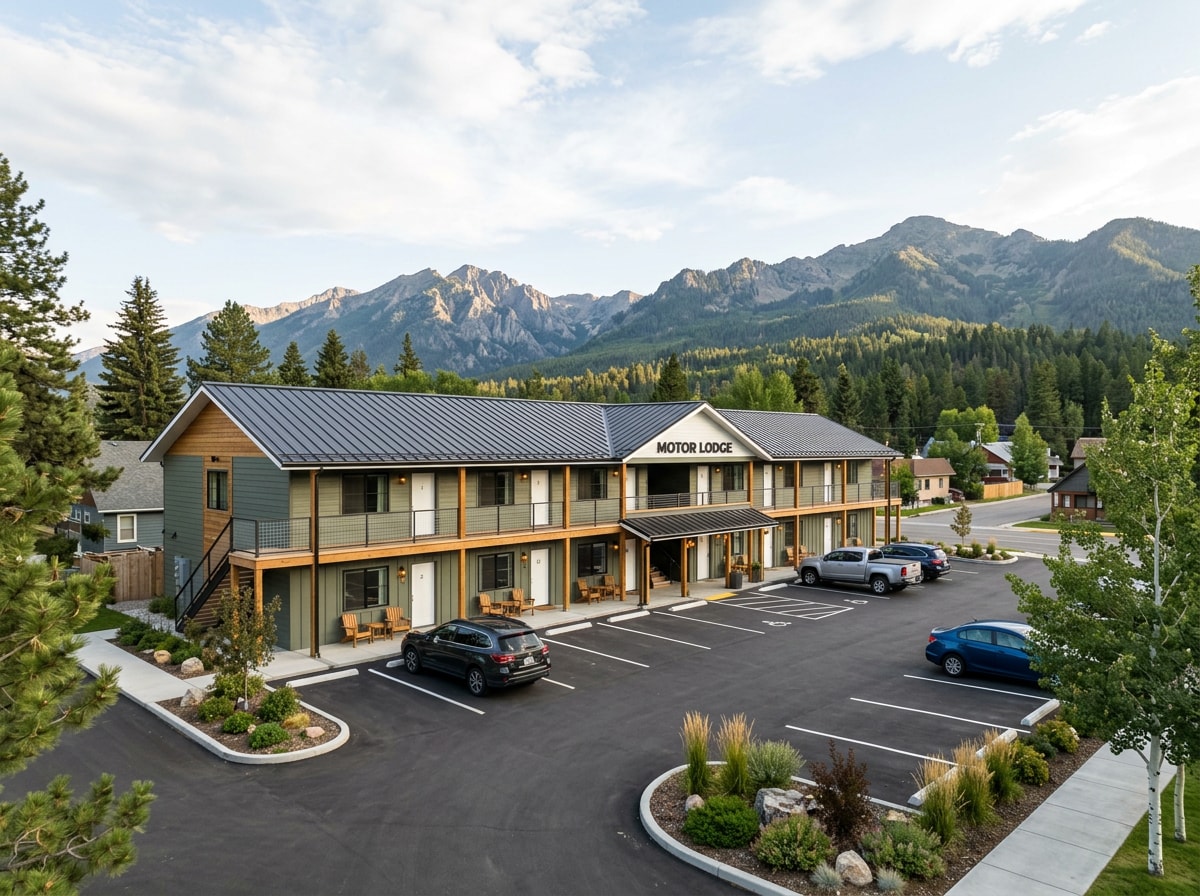
On recent lodge and motel renovation work in this region, we've sequenced guest-room upgrades by wing, closing one section at a time, so a property never drops below the room count it needs to stay open through winter corporate and event bookings. That kind of phasing plan needs to be locked in before a shovel hits the ground, not figured out mid-project.
How Hospitality Construction Differs From Office and Retail Build-Outs
Several characteristics set hospitality apart from office or retail work, and the gap is wide enough to lay out side by side.
| Characteristic | Hospitality | Office | Retail |
|---|---|---|---|
| Occupied-building phasing | Common, often nightly | Rare | Occasional |
| Brand/franchisor approval steps | Extensive | None | Limited |
| FF&E coordination complexity | High, lead-time driven | Low | Moderate |
| Code scrutiny on existing buildings | High (life safety, ADA) | Moderate | Moderate |
The throughline here: hospitality construction challenges stem less from the building itself and more from keeping a 24/7 business running through it.
How to Choose a Hospitality General Contractor
Vetting a hospitality GC is different from vetting a standard commercial builder. Look for:
- Brand-flag experience. Ask which franchisors they've worked under and whether they've sat through a design review board.
- Occupied-building portfolio. Ask for a project where guests stayed on site during construction, and how they sequenced it.
- FF&E coordination process. Ask how they track vendor lead times against the construction schedule, not just the build schedule.
- Licensing and insurance specific to your state. Confirm active coverage before any site visit.
- References from owners, not just brands. A brand testimonial tells you less than an owner who lived through the renovation.
You can see examples of our own phased and ground-up work on our projects page, and the full list of services we bring to a hospitality build on our homepage.
If you're scoping a hotel, lodge, or restaurant project in Wyoming or Montana, get a free estimate before you lock in a renovation window. Shoulder-season scheduling fills up fast in this region.
FAQ
What does a hospitality general contractor do?
A hospitality general contractor manages construction and renovation of hotels, resorts, and F&B venues, coordinating design, permitting, subcontractors, and FF&E delivery while the property stays operational.
What is a PIP and who pays for it?
A Property Improvement Plan is a brand-mandated renovation scope required when a hotel enters or renews a franchise agreement. The property owner pays for it, though some brands offer partial key money incentives toward the cost.
How much does hotel construction cost per key in 2026?
New construction runs roughly $213,000 per key at the median, with luxury properties exceeding $1.6 million per key. PIP renovations range from $8,000 per key for guest rooms only up to $40,000 or more per key for a full midmarket scope.
How long does a hotel renovation take while staying open?
A phased renovation on an occupied hotel typically takes longer than the same scope on a vacant building, because work has to move wing by wing or floor by floor. Ground-up select-service builds generally run 14 to 20 months from groundbreaking to opening.
What's the difference between a hospitality GC and a standard commercial GC?
A hospitality GC is used to occupied-building phasing, franchisor design approval, and FF&E lead-time coordination. A standard commercial GC may never have worked under a brand's design review board or sequenced construction around nightly guests.
Do hotel restaurants need separate permits from the hotel?
Yes. A restaurant or bar inside a hotel generally has to meet standalone restaurant and health code requirements in addition to the hotel's own building and life-safety codes.
Jordan Kessler, a senior project manager with Red Rock Constructions, has managed phased lodge and motel renovations across Wyoming's Bighorn Basin. Questions about a hospitality or hotel project in the region can go directly to our team through contact us.