General contractor fire restoration confuses most homeowners because two very different professionals use overlapping language. A restoration company stabilizes, cleans, and documents the damage. A general contractor rebuilds what was lost. Here's how to tell which one you need, and when you need both.
General Contractor vs. Restoration Company: The Short Answer
After a serious fire, most homeowners end up needing both a restoration company and a general contractor, sometimes as two separate firms, sometimes as one company licensed to do both.
A restoration company handles the emergency side: removing standing water, drying out structural materials, scrubbing soot off surfaces, and compiling the documentation your insurance adjuster will want. A general contractor steps in once the property is safe and dry, handling permits, framing, drywall, and the finish work that brings the home back to livable condition.
The two roles overlap in intent (restoring your property), but almost never in skill set or equipment. Hiring the wrong one first is one of the most common and costly mistakes homeowners make after a fire. If you're already planning the rebuild phase, our general contractor services page outlines what that work typically covers.
Restoration Company vs. General Contractor: Key Differences at a Glance
Timing, licensing, equipment, and task ownership all split cleanly between the two roles. Restoration professionals mitigate and document the loss first. General contractors rebuild and finish the structure only after the property is stabilized and cleared.
| Factor | Restoration Company | General Contractor |
|---|---|---|
| Primary job | Stabilize, clean, dry | Rebuild, finish |
| Enters project | Within 24–48 hours | After mitigation clears |
| Fire-related tasks | Soot/smoke cleanup, odor removal, water extraction | Framing, drywall, electrical coordination, carpentry |
| Equipment | Extractors, air movers, negative-air machines | Standard construction tools |
| Documentation | Moisture logs, loss inventories | Permits, construction schedules |
| Licensing | IICRC certification | State contractor license |
| Typical response time | Same-day to 24 hours | Scheduled, post-mitigation |
| Final deliverable | A dry, safe, clean structure | A rebuilt, code-compliant home |
What Does a Fire Restoration Company Do?
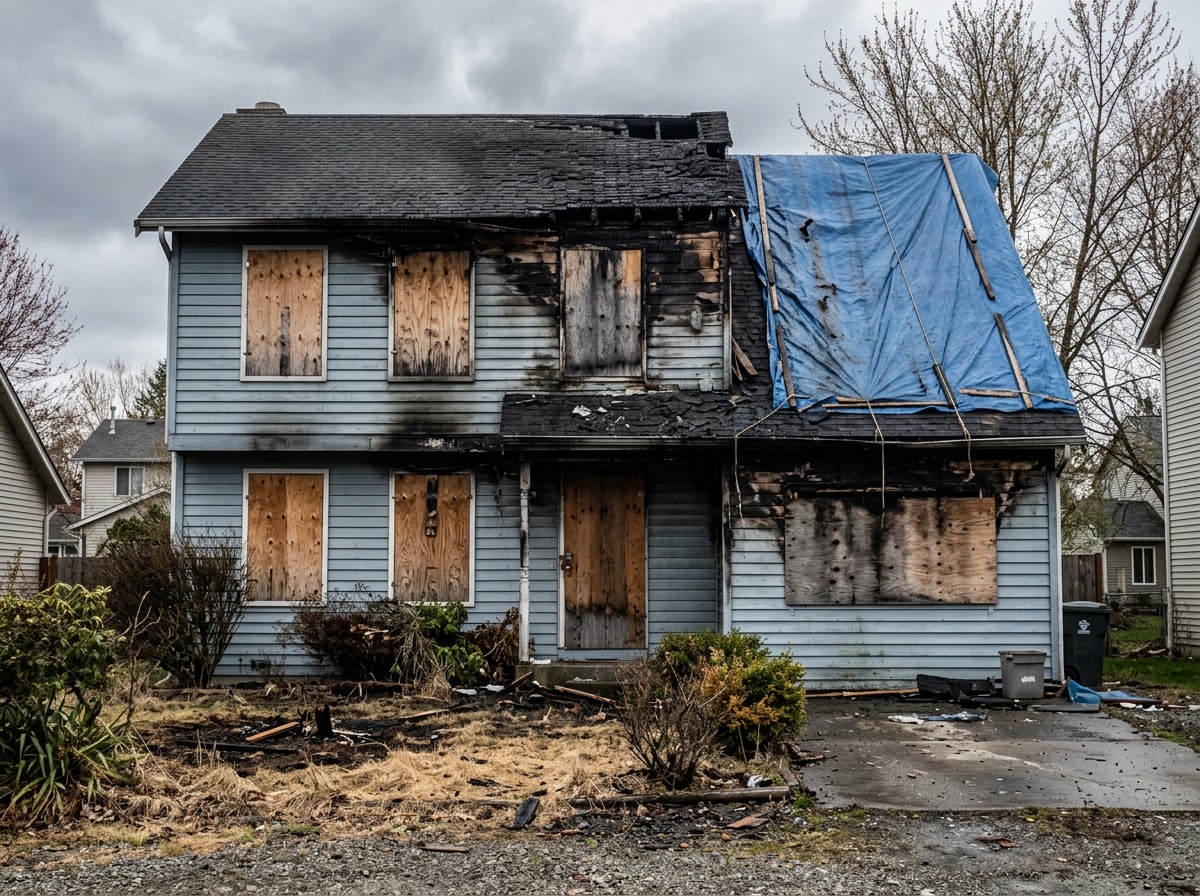
A fire restoration company's job is emergency mitigation: getting into the property fast, boarding up openings, and starting soot and smoke cleanup before damage spreads further. Structural drying and insurance documentation typically follow in the same visit. This phase usually begins within 24 to 48 hours of the loss, often before anyone has started thinking about the rebuild.
Core Restoration Services
A restoration crew's work isn't a side offering, it's the backbone of what makes a company qualified to respond to fire damage at all. Core services include:
- 24/7 emergency response and board-up
- Water extraction and structural drying
- Mold remediation
- Fire and smoke cleaning, including odor removal
- Contents restoration (packing out, cleaning, and storing belongings)
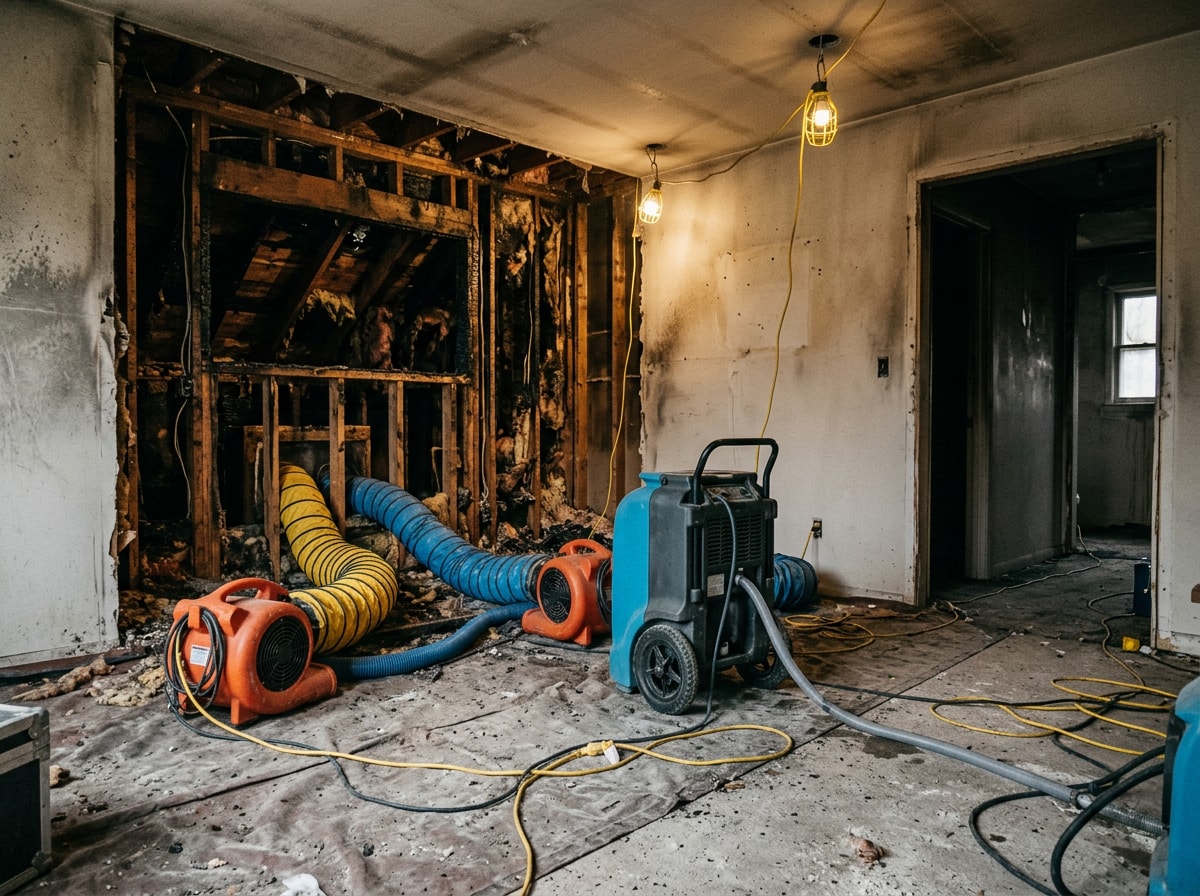
Truck-mounted water extractors, commercial-grade dehumidifiers, and negative-air machines aren't tools a typical GC owns or is trained to operate. The Institute of Inspection, Cleaning and Restoration Certification (IICRC) sets the protocols that govern how this equipment should be used, and in January 2025 it published the first publicly reviewed national standard specifically for fire and smoke work. This Standard describes the principles, processes, and procedures for assessing the presence, intensity of impact, and boundaries of fire residues and odors affecting a building. That update matters because it gives adjusters and homeowners a documented benchmark to hold contractors to, something that didn't formally exist before 2025. You can review the current list of IICRC fire and water standards directly on the IICRC standards page.
Water Extraction, Structural Drying, and Mold Remediation
The mitigation sequence usually starts with truck-mounted water extraction, followed by air movers and dehumidifiers running for days, not hours. Technicians verify progress with moisture meters, because a wall can feel dry to the touch while still holding enough moisture to grow mold underneath.
That's the piece people often miss: firefighting water creates its own damage event layered on top of the fire. Without proper dehumidification, a fire loss can turn into a mold problem within a couple of days.
What Does a General Contractor Do After a Fire?
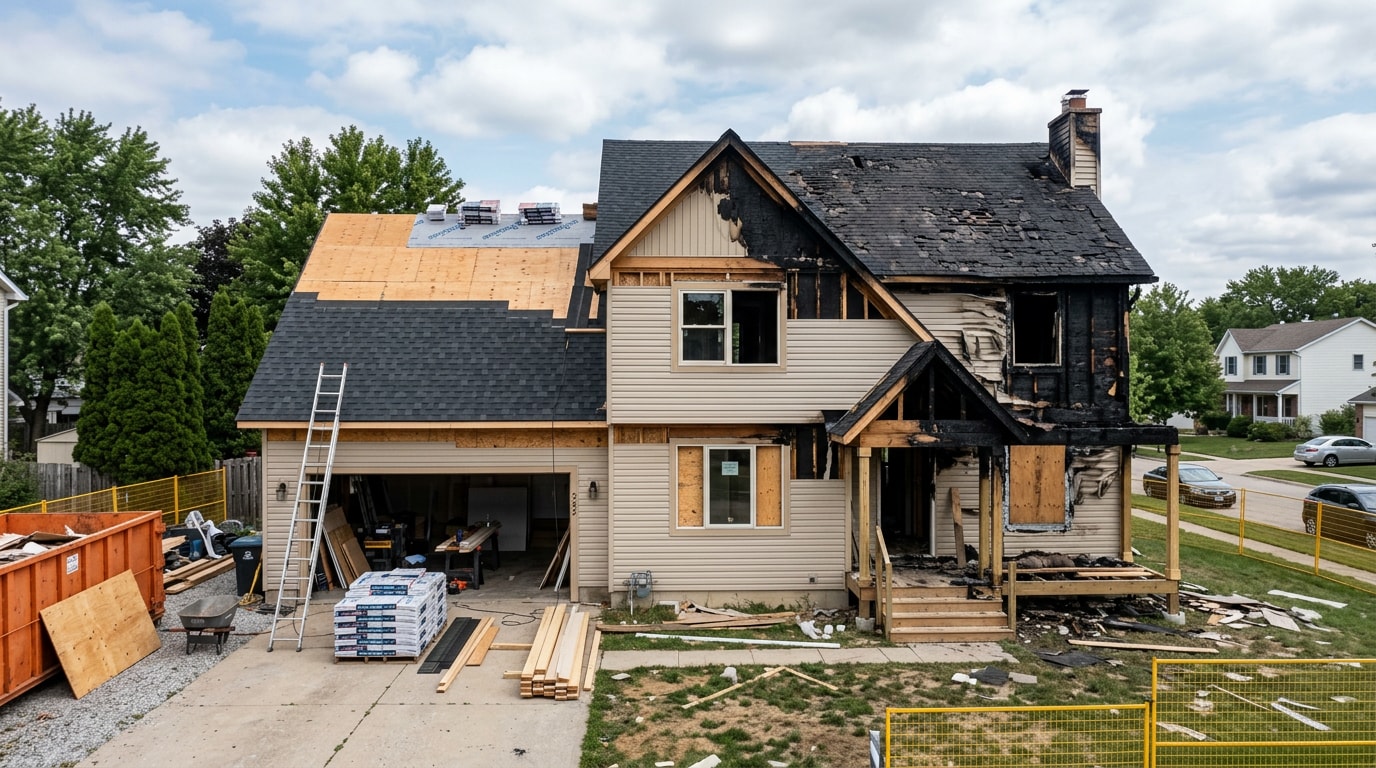
Once the property is stabilized, clean, and dry, the general contractor's work begins. Their scope covers structural repairs, framing, roofing, electrical and plumbing coordination, drywall, flooring, cabinetry, and finish carpentry, essentially everything involved in the rebuild. A GC's phase starts only after mitigation is complete and clearance testing confirms the space is safe to work in.
Rebuild scopes vary a lot by severity:
- Single-room fires usually mean drywall, paint, flooring, and cabinetry replacement.
- Multi-room fires often add electrical, HVAC ductwork, and structural framing repairs.
- Structural or whole-house losses may require engineering review, new permits, and in some cases partial demolition before rebuilding starts. If the damage is severe enough that part of the structure has to come down first, our guide on hiring a demolition contractor walks through what that process involves.
For homeowners managing a multi-trade rebuild, a dedicated project management service keeps framing, electrical, and finish crews on one schedule instead of three separate ones.
What a GC Typically Cannot Do
Most general contractors aren't trained or certified for the specialized cleanup fire losses require, which is one reason homeowners shouldn't assume a GC can handle the full job alone.
- Mold remediation requires specific containment protocols and certification a standard GC license doesn't cover.
- Smoke and soot cleaning depends on soot-type-specific chemistry that differs by what burned.
- Contents restoration, meaning inventorying and cleaning personal belongings, also falls outside typical GC training.
There's another wrinkle worth flagging: homes built before 1978 may contain lead-based paint, and rebuilding them requires contractors certified under the EPA's lead-safe renovation rule. EPA's RRP Rule requires that anyone paid to perform work that disturbs painted surfaces in homes, childcare facilities and preschools built before 1978 be certified and their employees be trained in the use of lead-safe work practices. Not every general contractor holds this certification, so confirm it before work begins. Full details are on the EPA's Lead Renovation, Repair and Painting Program page.
When You Need a General Contractor
Call a general contractor once the property has been stabilized, dried, and cleared by the restoration team, not while active damage, odor, or standing water is still present. Bringing in rebuild crews too early can mean redoing work once remaining moisture or soot surfaces later.
Some firms hold both an IICRC certification and a general contractor license, which lets them manage the entire process without handing the project off between two companies. If that's available in your area, it can simplify scheduling and reduce the risk of gaps between mitigation and reconstruction.
For the rebuild phase specifically, a residential remodeling scope of work typically covers the drywall, flooring, cabinetry, and finish carpentry a fire-damaged home needs. If the fire also compromised the roof, which is common given how firefighting crews access attics, a roof replacement is usually scoped alongside the interior rebuild.
Our Experience Rebuilding After Fire Damage
The general contracting team at Red Rock Constructions has coordinated post-fire rebuilds across the Bighorn Basin and Yellowstone-area communities, stepping in once restoration crews clear a property for construction. That sequencing, mitigation first, rebuild second, is the single biggest factor in whether a fire-damaged home gets fixed once or fixed twice. If you're not sure which stage your property is in, contact us for a straight answer before you sign with anyone.
FAQ
What's the Difference Between a Fire Restoration Company and a General Contractor?
A restoration company stabilizes, cleans, and documents fire damage immediately after a loss. A general contractor handles permitting, rebuilding, and finish work once the property is dry and cleared for construction.
Can a General Contractor Handle Fire Damage Cleanup and Restoration?
A general contractor can manage the rebuild phase, but most lack the IICRC-certified training for structural drying, soot removal, and odor control needed during mitigation. Those tasks typically require a specialized restoration company.
Do I Need a Restoration Company or a General Contractor After a Fire?
If there's active damage (soot, odor, or firefighting water still present), call a restoration company first. Once the property is stable, dry, and cleared, a general contractor takes over for the rebuild.
How Long Does Fire Damage Restoration Take?
It depends almost entirely on severity. A single-room smoke event might be cleaned and repaired in a couple of weeks. A multi-room fire with structural damage often runs several weeks to a few months once permits, inspections, and reconstruction are factored in. Whole-house losses can take six months or longer from first board-up to final walkthrough.
Can One Company Handle Both Mitigation and Rebuild?
Yes, if that company holds both an IICRC certification for the mitigation side and a state contractor license for the construction side. Not every firm carries both, so confirm credentials for each phase before hiring.
Will My Homeowner's Insurance Cover Fire Restoration and Reconstruction Costs?
Most standard homeowner policies cover restoring a home to its pre-fire condition, though coverage limits and documentation requirements vary by carrier. Fire and lightning claims are also the costliest type of homeowners insurance claim on average. About one in 425 insured homes has a property damage claim related to fire and lightning , and the average payout runs well into the tens of thousands of dollars, which is why documentation from both the restoration and rebuild phases matters for your claim. Check your policy details or review the Insurance Information Institute's homeowners insurance statistics for current guidance on fire claims.