A general commercial contractor manages every phase of a non-residential build, from permits and bids through the final punch list, so owners don't have to coordinate a dozen trades themselves. This guide breaks down what these contractors actually do, what they cost, how licensing works, and the vetting questions that separate a solid GC from a risky one.
What Is a General Commercial Contractor?
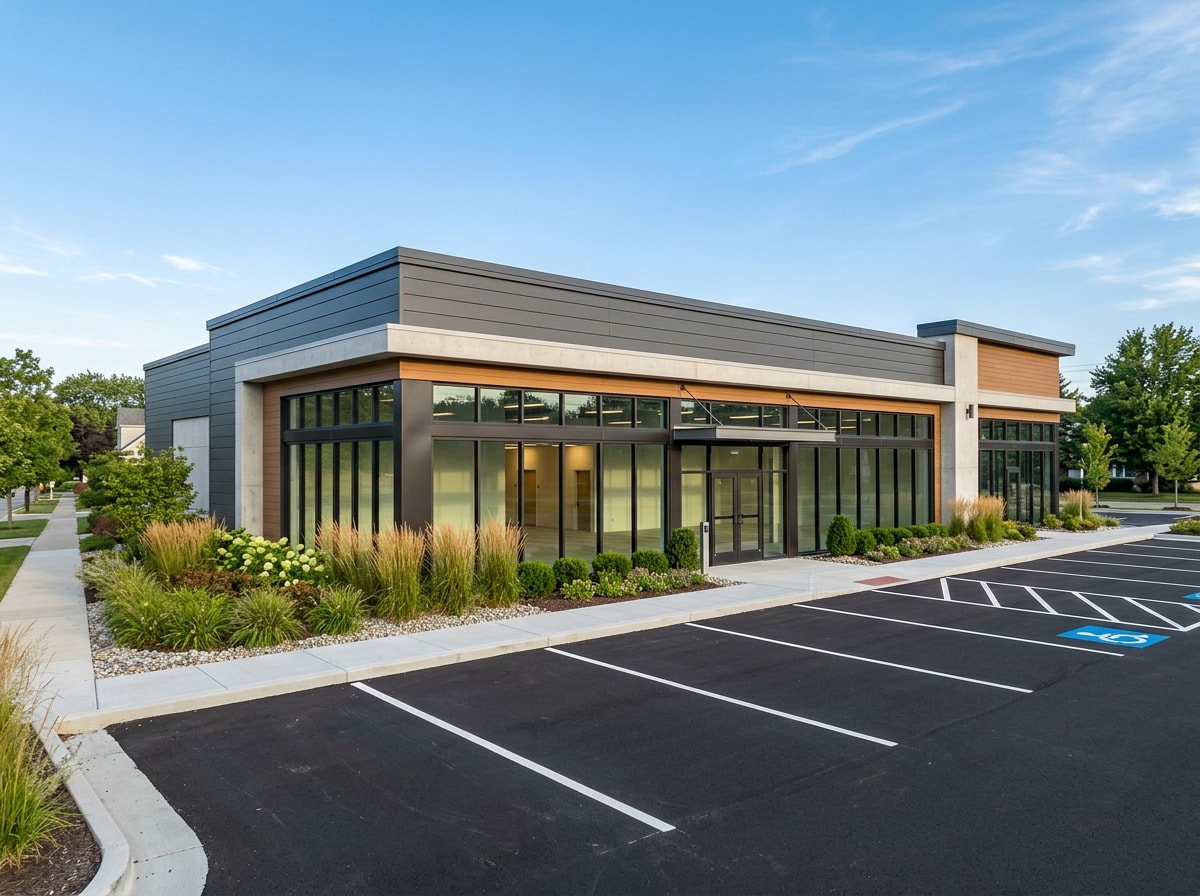
A general commercial contractor is a licensed construction professional who manages non-residential building projects such as offices, retail stores, and warehouses. They run the job from the first permit application to the final walkthrough, overseeing subcontractors, schedules, and budgets along the way.
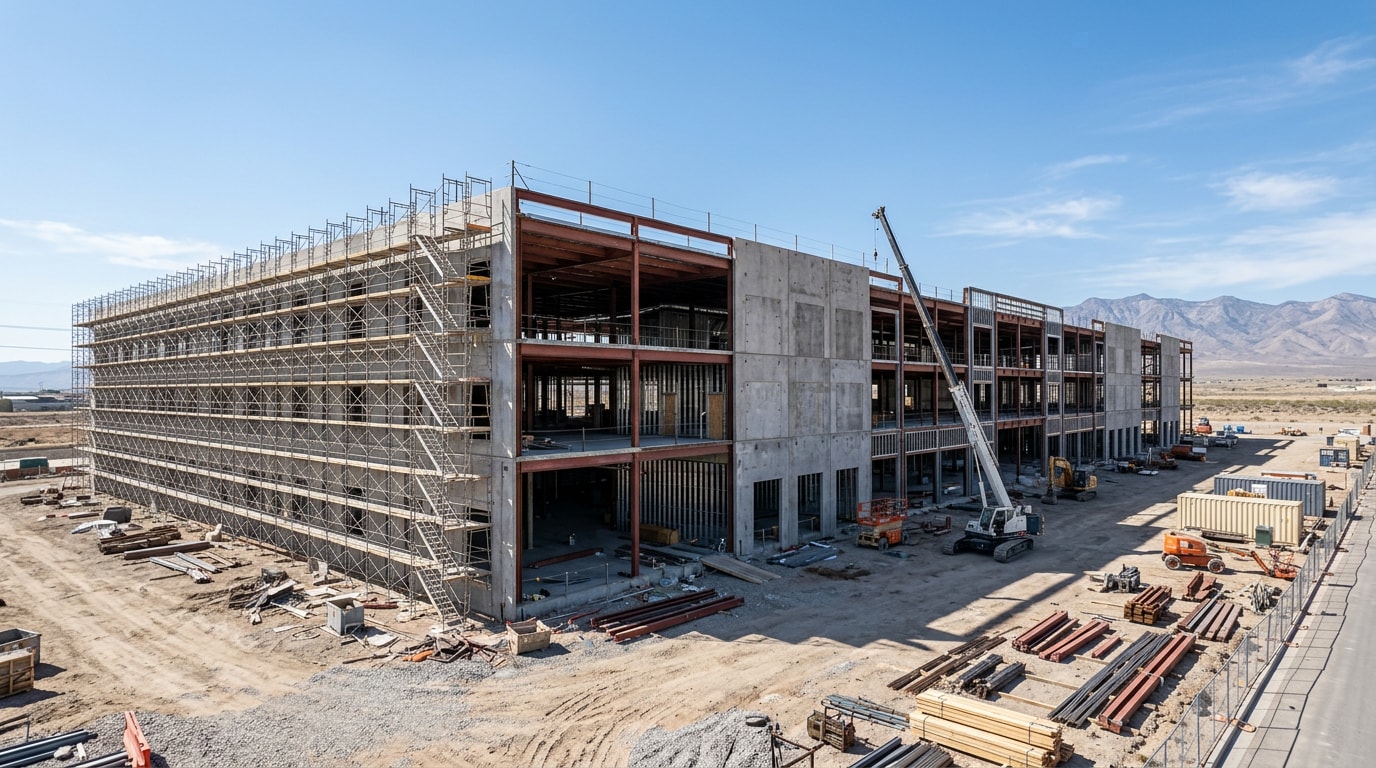
These contractors handle projects of nearly every size: corporate offices, retail centers, healthcare facilities, warehouses, and industrial plants. They act as the hub connecting architects, engineers, inspectors, and trade crews so the project moves forward on one coordinated timeline.
At Red Rock Constructions, our crews have run jobs ranging from retail build-outs in Cody to steel-frame warehouses outside Billings. In a region with a short building season, that coordination role matters more than it does in milder climates, because one missed inspection window can push a project into a winter shutdown.
Learn more about our commercial team on the Red Rock Constructions homepage.
What Does a General Commercial Contractor Do?
Before a shovel hits the ground, a commercial GC is already deep in pre-construction: project planning, cost estimation, and permit applications. Once building starts, the focus shifts to coordinating subcontractors, managing the schedule, controlling quality, and enforcing site safety.
Throughout the job, the contractor also handles documentation, keeps architects and engineers aligned, manages material procurement, and tracks code compliance. Two of these responsibilities deserve a closer look.
Project Planning
Commercial GCs break large projects into phases: site work, structural, mechanical/electrical/plumbing, and interior finish. Each phase gets its own timeline and cost estimate, which lets the contractor sequence trades correctly and catch conflicts before they turn into expensive delays.
Good planning also builds in buffer time for inspections and material lead times. Commercial projects tend to need more of both than residential ones.
Legal and Regulatory Compliance
The GC manages permit and licensing applications, then coordinates with local inspectors to keep the project moving through each compliance checkpoint. Commercial projects are governed by a different code family than homes.
Most U.S. jurisdictions apply the International Building Code (IBC) to commercial structures, while single-family homes typically fall under the International Residential Code. You can see which edition your state has adopted through the International Code Council's IBC page.
A commercial GC also enforces jobsite safety under OSHA's construction standards, tracks zoning regulations, and manages fire and life-safety and accessibility requirements that don't apply to most residential builds.
Commercial vs. Residential Contractors: What's the Difference?
Commercial contractors handle business-related buildings, offices, retail, warehouses, and industrial facilities, with larger budgets, longer timelines, and more layered regulatory requirements than residential contractors face. A home remodel and a 50,000-square-foot warehouse simply aren't built, financed, or inspected the same way.
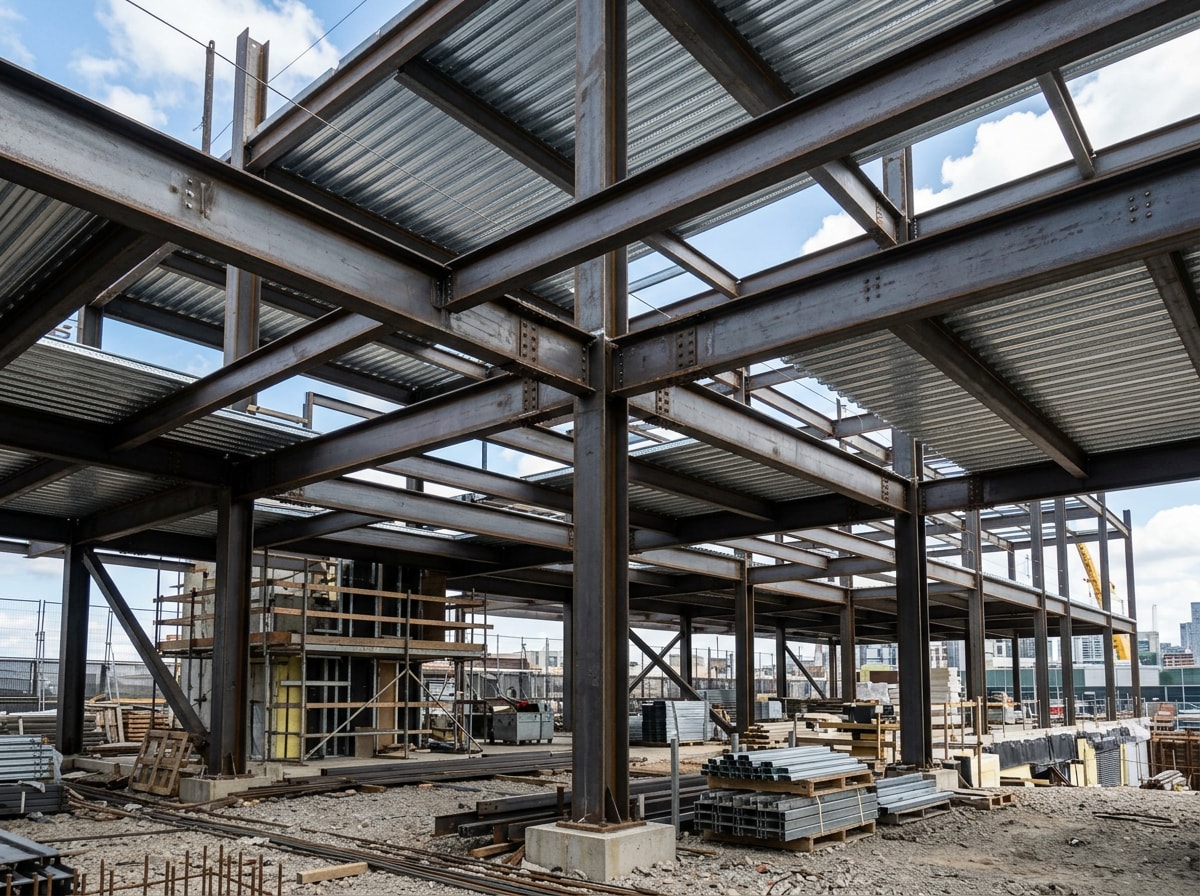
Structural materials differ too. Commercial buildings typically rely on steel and concrete framing for load and fire resistance, while residential construction is usually wood-framed. Licensing paths, team size, and contract value diverge sharply as well.
| Factor | Commercial Contractor | Residential Contractor |
|---|---|---|
| Structure type | Steel, concrete, engineered systems | Wood framing |
| Governing code | IBC (International Building Code) | IRC (International Residential Code) |
| Typical client | Businesses, developers, institutions | Homeowners |
| Contract value | Often six to eight figures | Typically five to six figures |
| Licensing path | Commercial-specific license, often exam-based | General residential contractor license |
| Workforce | Large crews, licensed/union trades | Small crews, generalist labor |
Because contract value and regulatory scope are higher on commercial jobs, owners should expect a longer bidding and permitting process than they'd see on a residential project.
How Much Does a General Commercial Contractor Cost?
A general commercial contractor's fee typically runs 10% to 20% of total project value, though the exact figure depends on contract type, project complexity, and the delivery model chosen. That fee covers overhead and profit on top of direct labor and material costs.
Three contract structures are common: lump sum, cost-plus, and guaranteed maximum price (GMP). Each allocates risk differently between owner and contractor.
| Contract Type | Typical GC Fee | Risk Allocation |
|---|---|---|
| Lump Sum | 10-15% | Contractor absorbs cost overruns |
| Cost-Plus | 5-15% plus reimbursed costs | Owner absorbs most cost risk |
| GMP | 10-18%, capped | Shared, with savings often split |
As a rough example: a $500,000 commercial project with a 12% lump-sum fee adds roughly $60,000 to the budget. The same project under a GMP contract at 15% with a shared-savings clause could land near $75,000, depending on how close the final cost comes to the cap.
Material costs swing these numbers too. You can track current trends through the Bureau of Labor Statistics' nonresidential building construction PPI data before you lock in a budget.
Ready to scope your own job? Get a Free Estimate and we'll walk you through the numbers before you commit to a contract type.
Licensing and Qualifications for a Commercial General Contractor
Commercial GCs must carry valid licensing, insurance, and relevant certifications to legally operate on non-residential projects. This protects owners and keeps the job compliant with local building authorities.
Before hiring, confirm a contractor holds an active state or local contractor license. Also confirm adequate insurance:
- General liability coverage
- Workers' compensation coverage
- Builder's risk coverage
- A surety bond, which is common on larger commercial jobs
Getting licensed generally means passing exams covering business law and building codes through a state licensing board. Exact requirements, exam content, and project-value thresholds vary significantly by state, so there's no single national rule here.
Some contractors use the NASCLA Accredited Examination for Commercial General Building Contractors as a multi-state path toward qualifying in several jurisdictions at once. Check our general contractor services page for the licensing and insurance details specific to our team.
Benefits of Hiring a Commercial Construction Company
Hiring a dedicated commercial construction company brings organization and accountability to a process with a lot of moving parts. Two benefits stand out most often.
Streamlined Communication
A commercial GC serves as the single point of contact for suppliers, subcontractors, and the client, which cuts down on miscommunication. Instead of chasing down five different trades, owners get one line of communication for decisions and problem-solving across all stakeholders.
Project Management
From initial planning through final execution, a GC's project management keeps the job on schedule and on budget. That oversight also reduces risk, since issues get caught and resolved before they cascade into bigger, costlier problems later in the build.
Commercial Construction in Wyoming and Montana: What's Different
National cost guides rarely account for the Mountain West. Two factors change the math here more than anywhere else: weather windows and supplier distance.
Foundation and sitework crews in Powell, Cody, Sheridan, and the Bighorn Basin generally work around a shorter outdoor construction season than contractors in warmer states. That compresses the schedule for site preparation and concrete work, which means a commercial GC here has to plan backward from winter rather than forward from a signed contract.
Material lead times also run longer. Steel, specialty glazing, and some mechanical equipment travel farther to reach job sites in Worland, Greybull, or Lovell than they would in a major metro market. A GC who's built locally will price that lead time into the schedule up front instead of discovering it mid-project.
We've applied this approach on projects across Billings, MT and Cody, WY, and it's the single biggest reason regional timelines differ from the national averages you'll see in generic guides.
5 Tips for Hiring the Right General Contractor for Your Commercial Project
Vetting a commercial contractor properly up front saves headaches later. Here's a practical checklist:
- Verify licensing and insurance. Confirm the license is active and insurance limits match your project size. Red flag: a contractor who hesitates to provide proof.
- Check commercial-specific experience. A contractor who's only built homes may not understand IBC compliance or commercial-scale logistics.
- Request references from similar projects. Ask past clients about schedule accuracy and how change orders were handled.
- Compare bids on scope, not just price. Red flag: a bid dramatically below competitors often means missing scope or corner-cutting ahead.
- Confirm communication and reporting style. Ask how often you'll get schedule and budget updates before signing anything.
For a deeper walkthrough on vetting local bids, see our guide on finding the right commercial general contractor near you.
Browse our commercial construction services to see the project types we typically manage, or check our commercial roofing work if your project includes a roof replacement or new install.
FAQ
What should I ask a general contractor before signing a commercial contract?
Ask how the contractor manages subcontractors, communicates schedule changes, handles project variations, and structures payment draws. Clear answers here usually signal a well-organized commercial contract process.
What is the difference between a commercial contractor and a general contractor?
"General contractor" is a broader term covering both residential and commercial work. A commercial contractor specializes specifically in non-residential projects like offices, retail, and warehouses.
How is a commercial general contractor different from a subcontractor?
The GC holds the prime contract and carries overall responsibility for the project. Subcontractors perform specialized trade work, like electrical, plumbing, or framing, under the general contractor's direction and schedule.
Do I need a license to be a commercial general contractor?
Yes, in nearly all states, though exact licensing requirements and project-value thresholds vary by location. Requirements typically include passing exams on business law and building codes through a state licensing board.
How long does a commercial construction project take?
It depends on the project type. A tenant improvement or interior build-out might take two to four months, while a ground-up commercial building often runs nine to eighteen months. In regions with a short outdoor construction season, add extra weeks for weather-dependent phases like sitework and foundations.
What's the difference between a general contractor and a construction manager?
A general contractor usually holds the prime contract and takes on cost and schedule risk under a fixed-price or GMP agreement. A construction manager often acts as the owner's agent for a fee, advising on budget and schedule without necessarily holding the trade contracts directly.